
Rainwater running off your roof might seem harmless, but when it collects around your home’s foundation, it can create problems. Soggy lawns, muddy flower beds, soil erosion, and water pooling near your basement are all signs that your gutters need a better drainage solution.
Fortunately, there are plenty of downspout drainage ideas that can help you manage rainwater while improving the appearance of your outdoor space and we can you find the solution that works with your yard’s layout and budget.
Here are 15 practical and attractive ways to redirect rainwater away from your home.
1. Decorative River Rock Drainage Bed
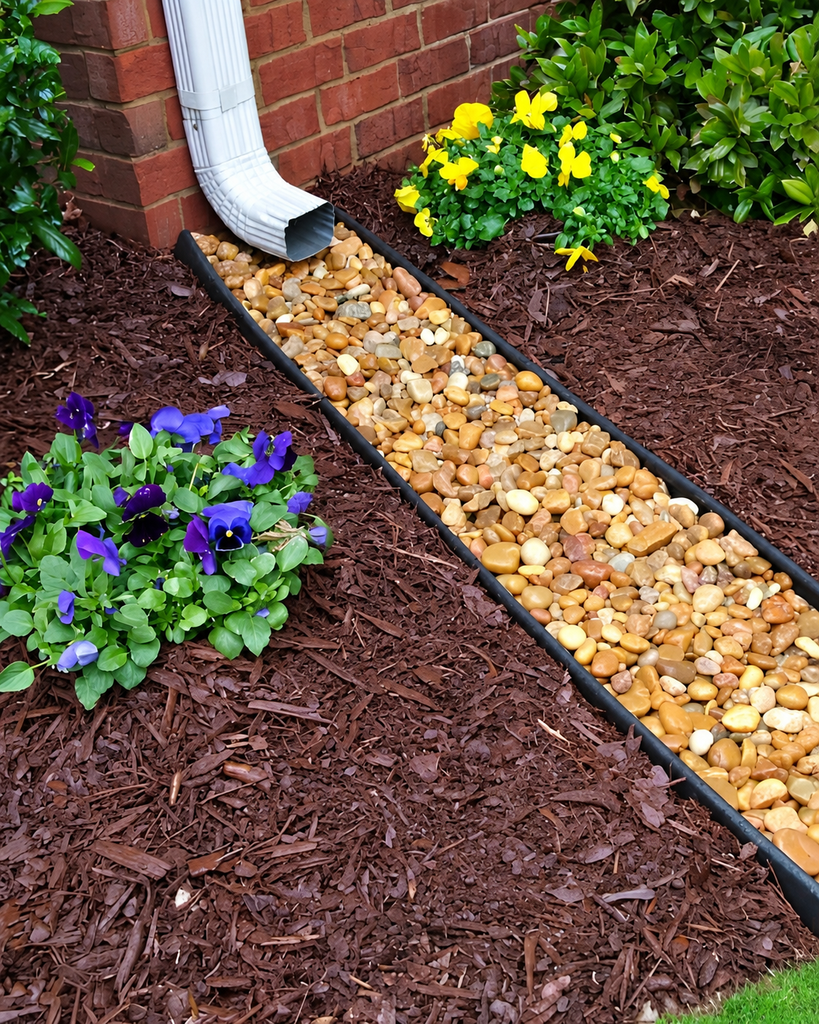
A river rock drainage bed is an attractive way to manage water flowing from your downspout while adding a natural feature to your landscaping.
Arrange smooth river stones in a shallow channel that slopes away from your foundation. The rocks help protect the soil from the force of falling water and reduce erosion.
You can use a combination of large and small stones to create a more natural appearance.
For a polished finish, outline the drainage bed with landscape edging and add low-growing plants along the sides.
Remember that rocks alone do not solve poor drainage. The channel needs a suitable slope and a safe place for the water to go.
2. Underground Downspout Drainage Pipe
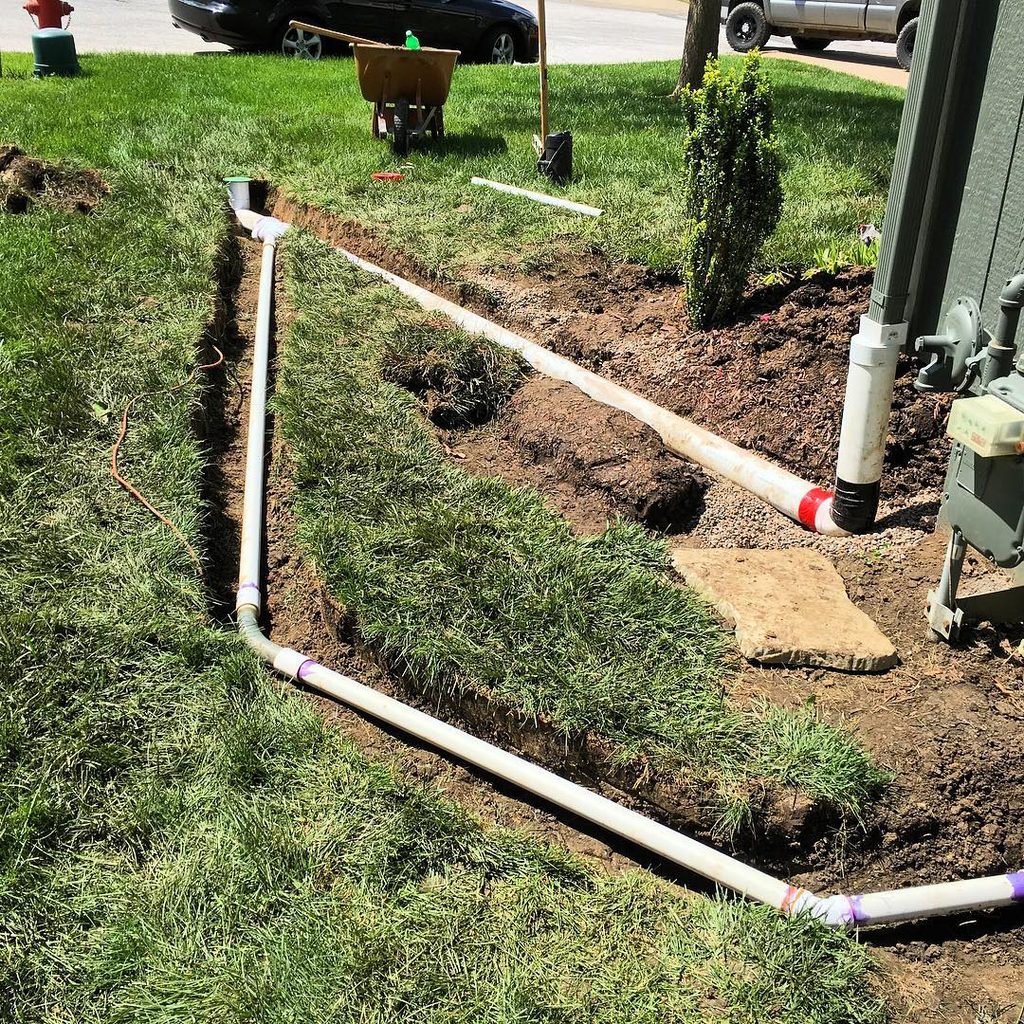
If you prefer a drainage system that stays out of sight, an underground downspout pipe is worth considering.
This system connects your downspout to a buried pipe that carries rainwater away from your home.
Solid drainage pipe is generally preferable for transporting roof runoff because it keeps water contained until it reaches the intended outlet.
The pipe can lead to a suitable surface discharge point, an approved stormwater connection, or another properly designed drainage system.
Plan the route carefully, maintain adequate slope, and include accessible cleanouts where needed.
Before digging, locate underground utilities and check local drainage requirements.
3. Rain Barrel Collection System
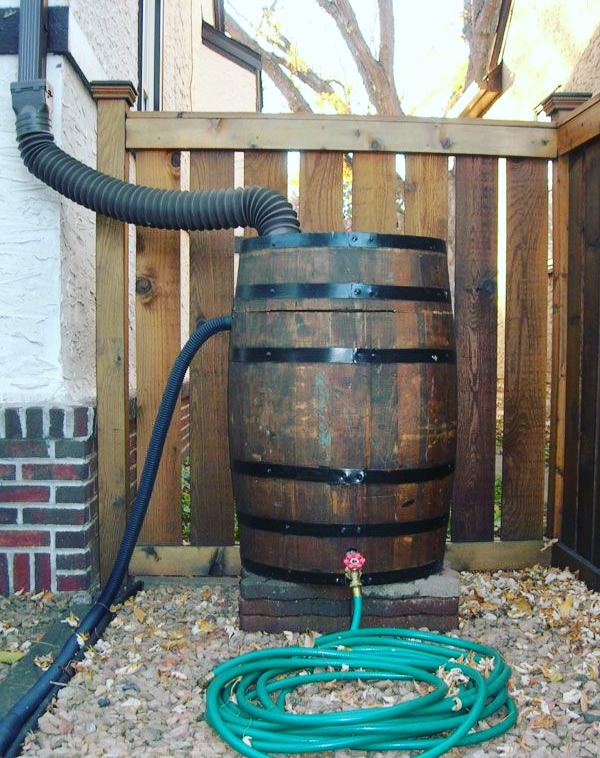
A rain barrel is a practical option if you want to collect rainwater for your garden instead of letting it run across your yard.
Install a rain barrel beneath a downspout using a compatible diverter that directs water into the container.
Once the barrel fills, you can use the collected water for ornamental plants and other suitable outdoor watering tasks.
Choose a barrel with a secure lid, screened openings, and a stable base.
You should also plan for overflow. A full barrel needs a properly directed overflow outlet that carries excess water away from your foundation.
For a more decorative appearance, choose a barrel that resembles a wooden cask or large ceramic planter.
4. Dry Creek Bed Drainage
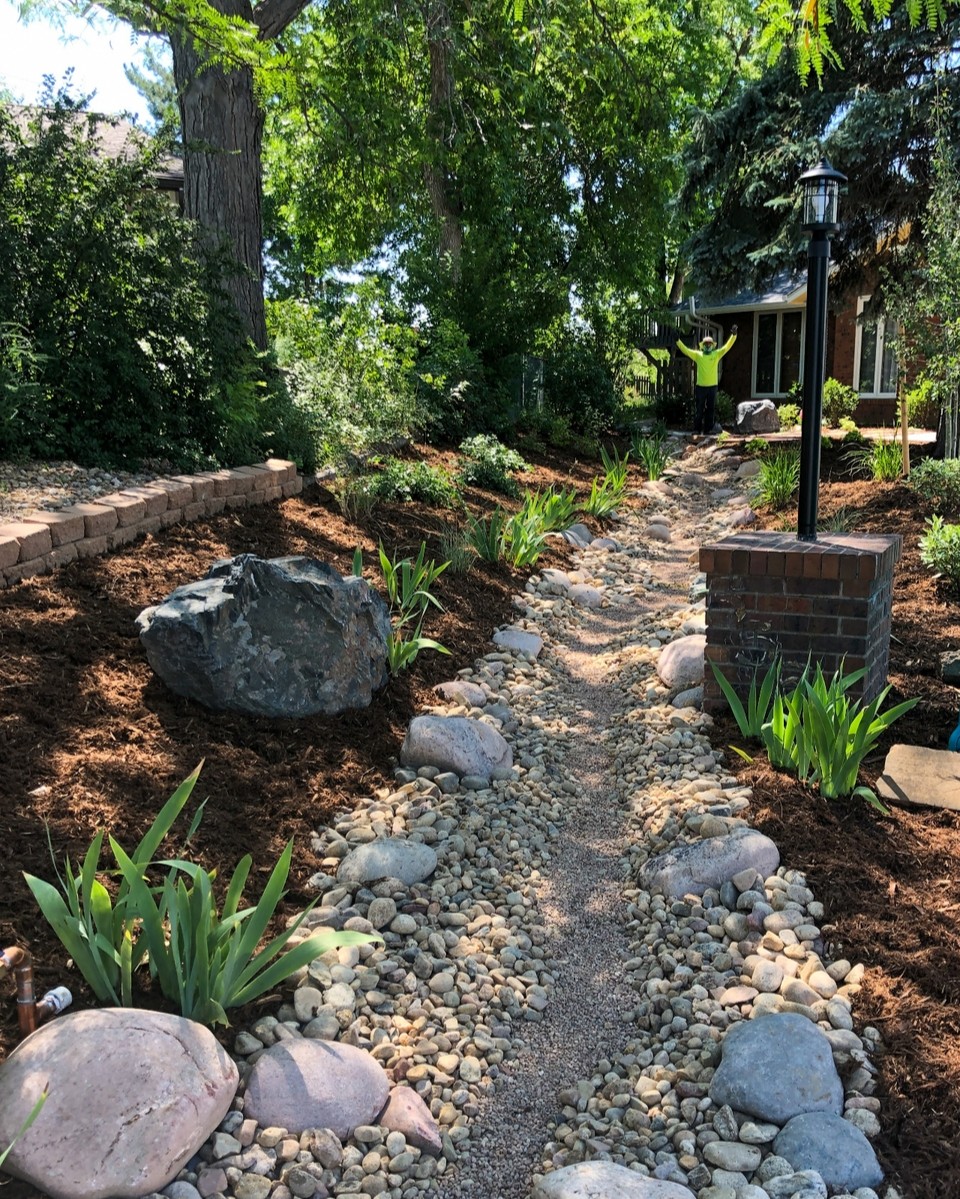
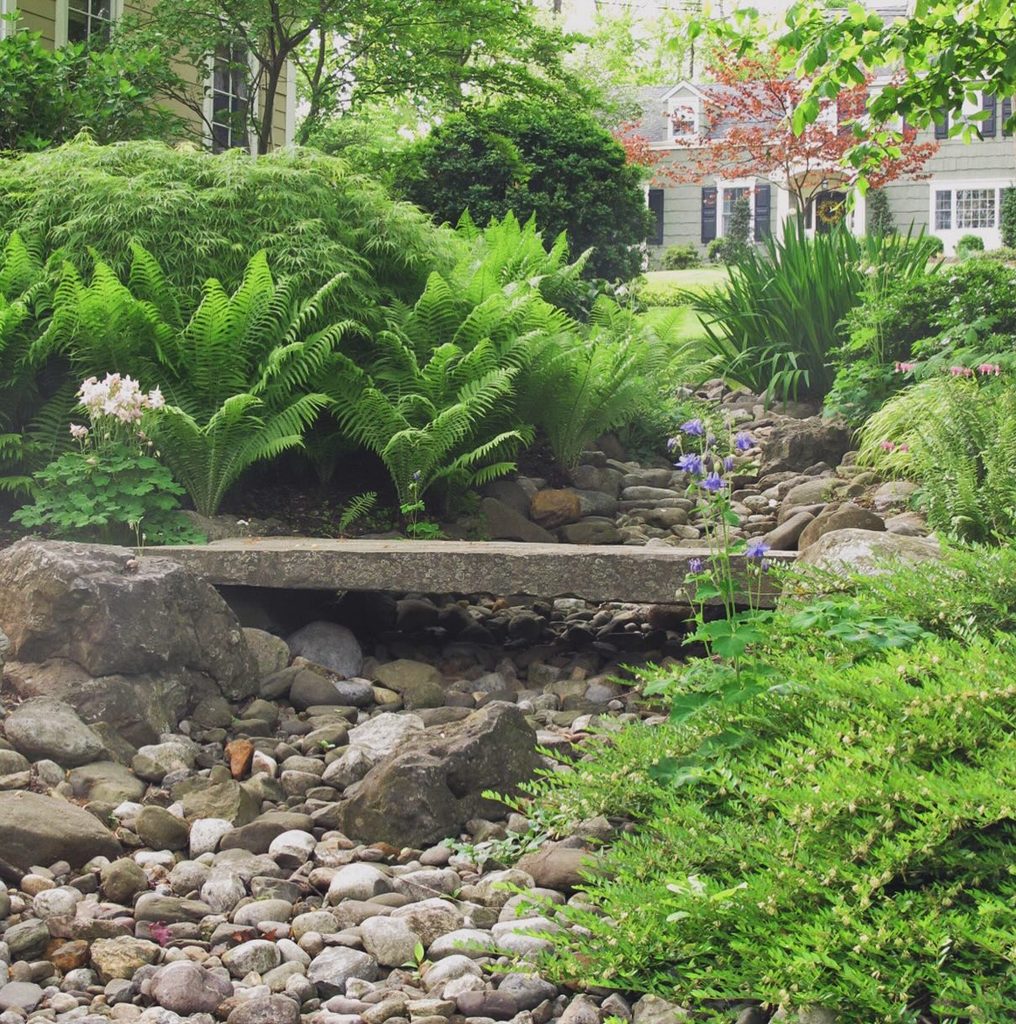
A dry creek bed can turn a drainage problem into an attractive landscaping feature.
Create a gently winding channel using river rocks, gravel, and larger decorative stones. During rainfall, the channel guides water away from the downspout and toward a suitable drainage area.
When the weather is dry, it looks like a natural streambed.
For a realistic appearance, vary the stone sizes and avoid making the channel perfectly straight.
You can also plant ornamental grasses and moisture-tolerant perennials along the edges.
Make sure the creek bed has enough capacity for heavy rainfall and doesn’t direct water toward neighboring properties or other structures.
5. Flexible Downspout Extension
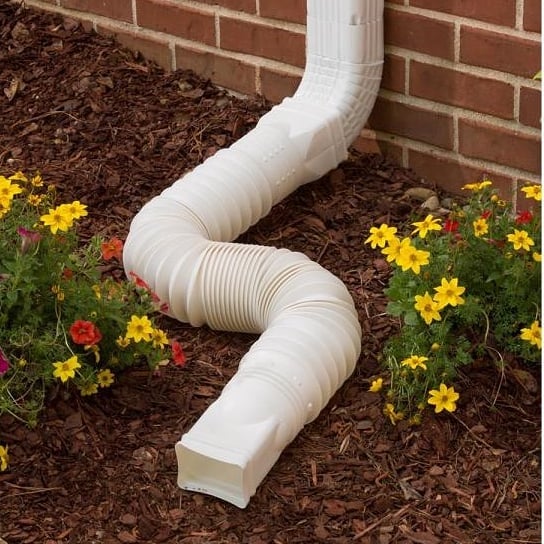
A flexible downspout extension is one of the simplest ways to move roof runoff farther away from your house.
These lightweight extensions attach to the bottom of your existing downspout and can be positioned around flower beds, walkways, and other landscaping features.
They are particularly useful when the original downspout releases water directly beside the foundation.
Choose an extension that fits your downspout securely and reaches a location where water can drain safely.
You can select a color that blends with your siding or landscaping to make it less noticeable.
Check the extension regularly for leaves, debris, and accidental disconnection.
6. Pop-Up Drainage Emitter
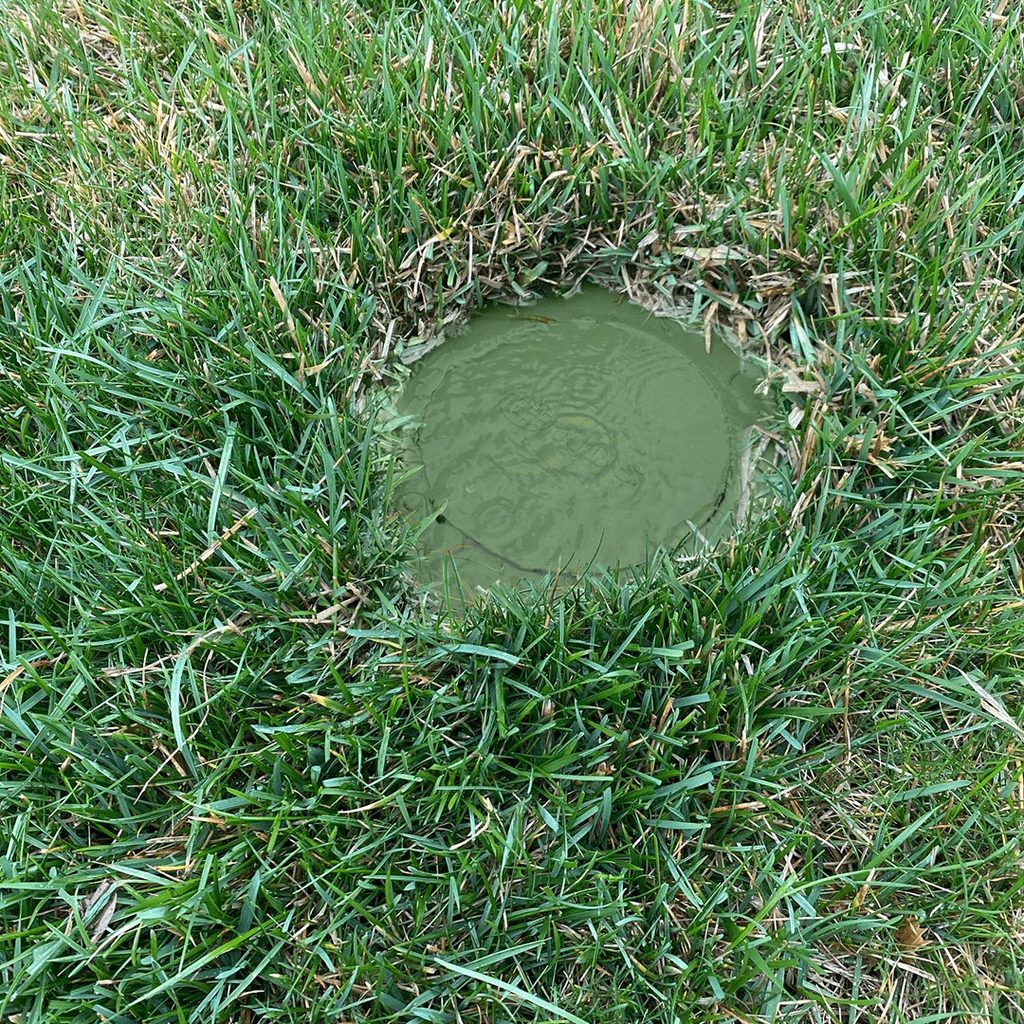
A pop-up drainage emitter provides a discreet outlet for an underground downspout drainage system.
The emitter sits nearly flush with the lawn and opens when water pressure builds inside the drainage pipe.
Once the flow stops, the lid closes again.
This makes it a convenient choice for homeowners who want to avoid exposed drainage pipes across their yard.
Install the emitter in an appropriate low-risk discharge area, away from your foundation and other structures.
The surrounding ground must be able to handle the released water without creating persistent puddles or erosion.
Regularly inspect the emitter to make sure grass, soil, and debris aren’t blocking its operation.
7. Rain Garden Beneath the Downspout
A rain garden is a beautiful way to manage rainwater while creating a colorful planting area.
It consists of a shallow landscaped depression designed to temporarily collect runoff and allow it to soak into the soil.
Choose plants that tolerate occasional flooding as well as periods of dry weather.
Native grasses, flowering perennials, and other locally suitable plants can create a natural-looking garden that changes throughout the seasons.
Before building a rain garden, check your soil’s infiltration rate and choose a location that is sufficiently far from your foundation.
Avoid placing one over a septic system or in an area where water already remains standing for long periods.
8. Decorative Downspout Splash Block

A splash block is a small but useful addition to a downspout that releases water onto the ground.
It helps spread the flow and protects the soil immediately beneath the outlet from erosion.
Traditional concrete splash blocks are practical, but decorative versions can also complement your landscaping.
Look for stone-textured designs or styles that resemble natural rock.
Position the splash block so it slopes away from your house and leads toward an area that can safely receive the water.
For larger roofs or areas with heavy rainfall, a splash block may need to be combined with a longer drainage channel or extension.
9. French Drain Connected to a Downspout
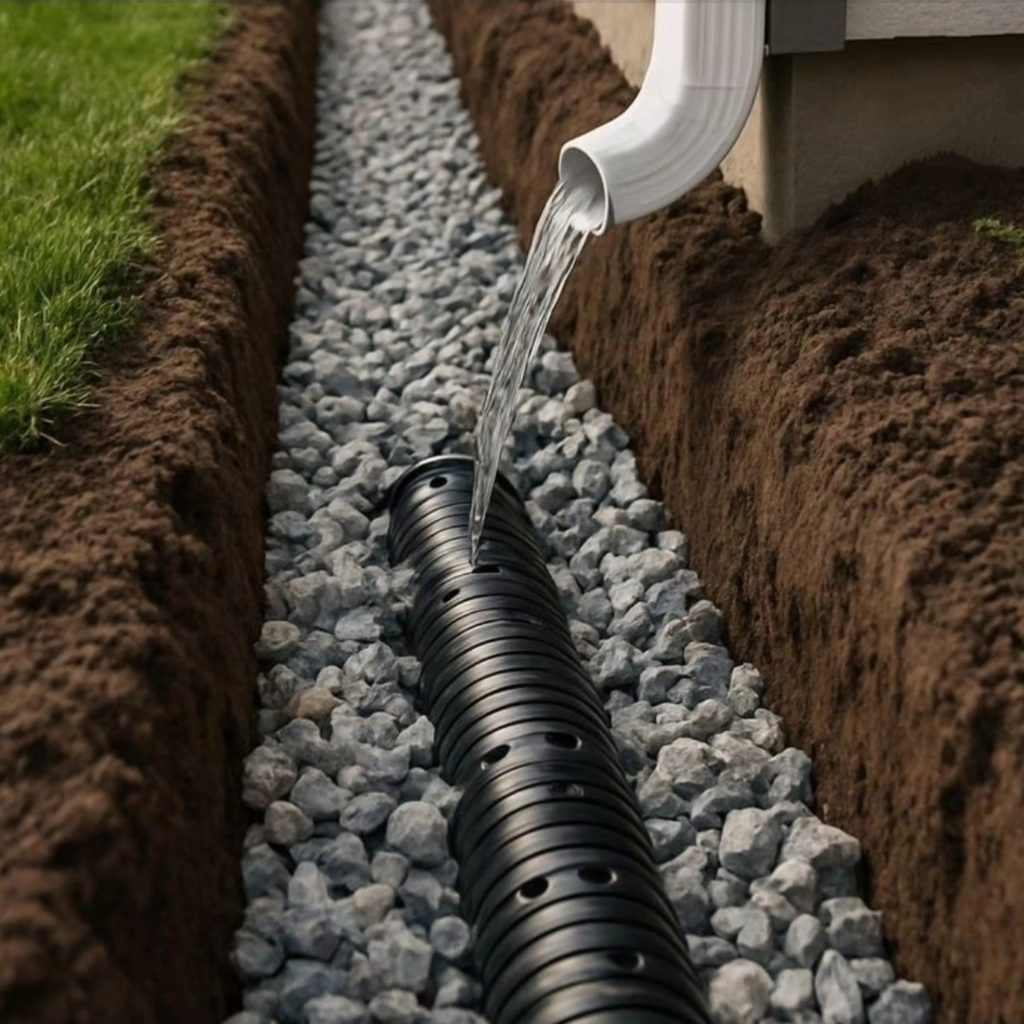
A French drain can help manage excess water in areas where the soil frequently becomes saturated.
The system typically consists of a gravel-filled trench containing a perforated drainage pipe.
It collects water from the surrounding soil and carries it toward a suitable outlet.
For roof runoff, use a separate solid pipe to transport water from the downspout before connecting it to an appropriately designed drainage system.
Sending concentrated roof runoff directly into a perforated pipe near your foundation can make existing moisture problems worse.
A properly planned system can help reduce soggy areas while keeping much of the drainage infrastructure hidden beneath the landscape.
10. Decorative Rain Chain with Drainage Basin
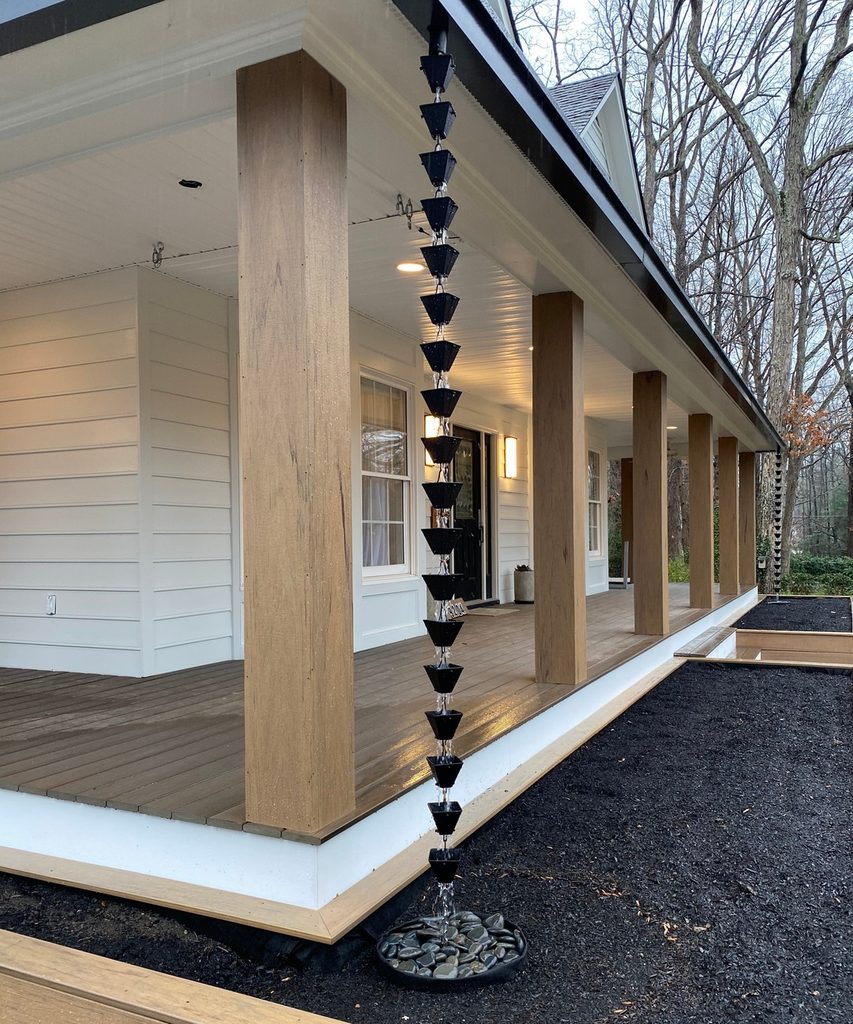
A rain chain offers a decorative alternative to a conventional downspout.
Instead of water traveling through a closed pipe, it flows along a series of metal cups or linked chains.
Copper rain chains are particularly attractive because they develop a natural patina over time.
Place a decorative basin or stone-filled drainage area beneath the chain to manage the falling water.
For the best results, install the chain in a location protected from strong winds and provide a suitable drainage outlet beneath it.
Rain chains may splash or overflow during heavy storms, so they aren’t appropriate for every roof or location.
11. Stepping Stone Drainage Channel
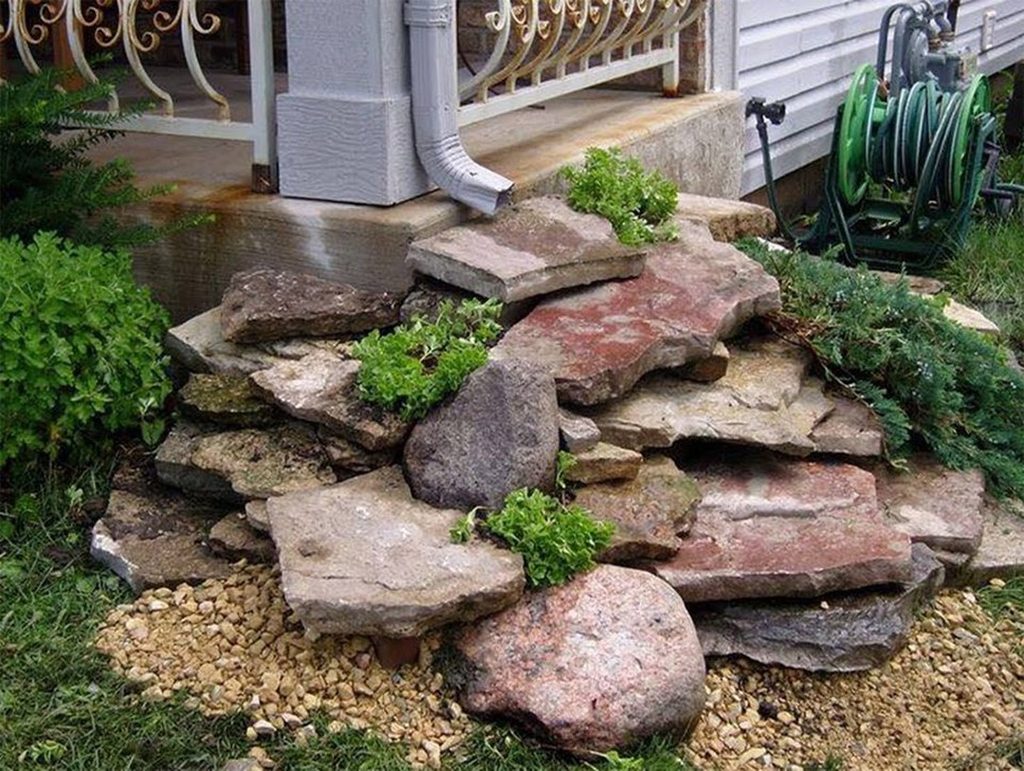
A stepping stone drainage channel combines a practical water-management feature with a decorative garden path.
Create a shallow drainage channel using gravel or river stones, then incorporate stepping stones where people need to cross.
This can work particularly well along the side of a house or between garden beds.
Choose large, stable stepping stones with a slip-resistant surface and install them on a properly prepared base.
The surrounding channel should have a consistent slope and a suitable outlet.
Avoid placing loose stones where they could create a tripping hazard or obstruct a frequently used walkway.
12. Buried Drainage Catch Basin
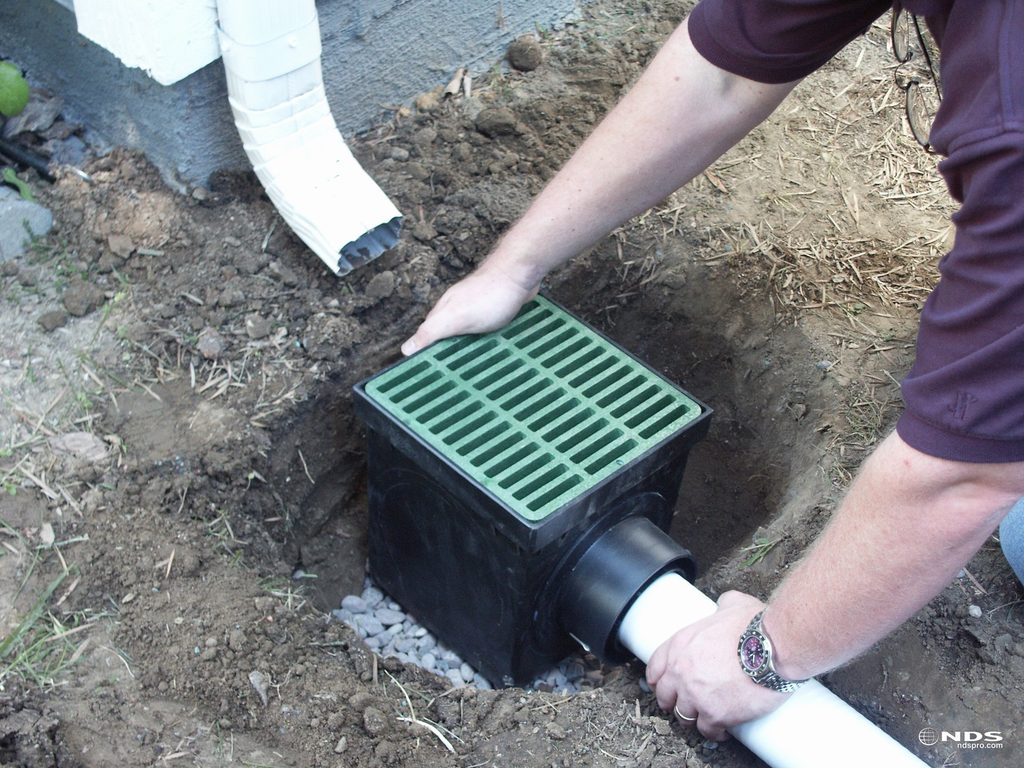
A catch basin is useful when water collects in a particular area of your yard.
It features a recessed chamber with a grated opening that allows surface water to enter while catching some leaves and debris.
The basin connects to a drainage pipe that transports the collected water toward a suitable discharge point.
You can install one near a low spot where runoff naturally gathers, provided the location and system are properly designed.
Choose a grate that blends with your landscaping and is suitable for the surrounding surface.
Clean the basin periodically to prevent sediment and leaves from reducing its drainage capacity.
13. Rainwater Collection Planter
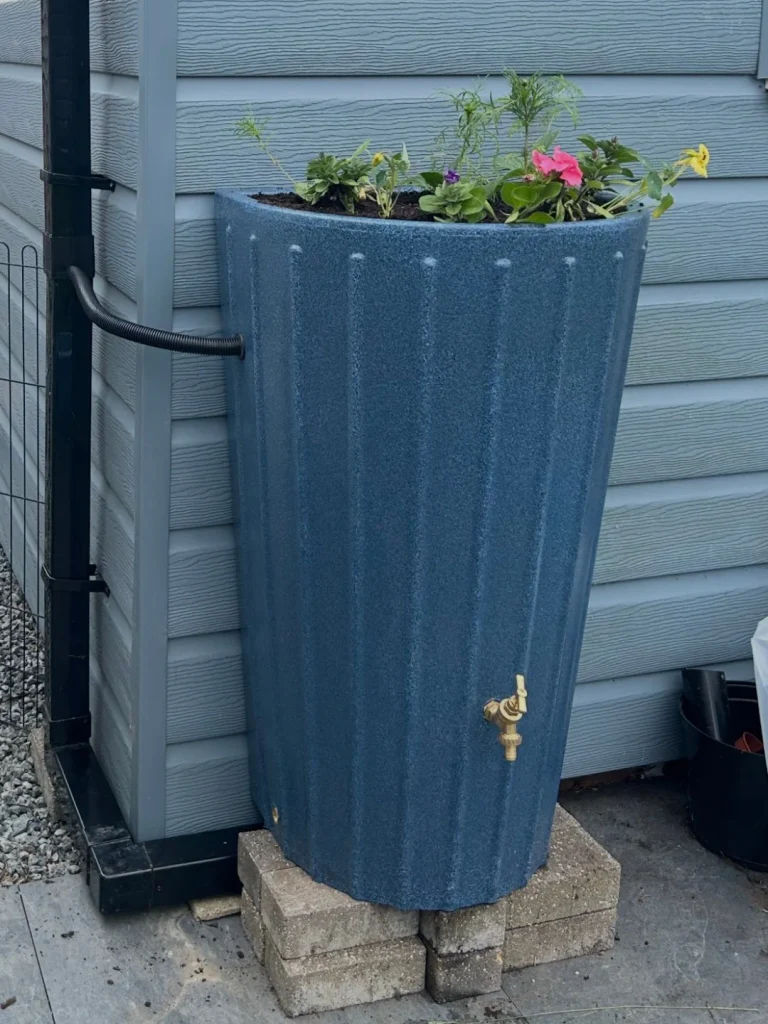
A rainwater collection planter combines water storage with decorative greenery.
Some purpose-built planters include an integrated reservoir that collects roof runoff and stores it for later use.
Others use a downspout diverter to supply a separate collection container.
This option can be especially attractive near patios and smaller garden spaces where a traditional rain barrel might feel too bulky.
Choose plants suited to the planter’s watering system and make sure the container has an appropriate overflow outlet.
Avoid directing an unrestricted downspout into an ordinary planter, as the volume of water can overwhelm the soil and damage the plants.
14. Gravel Drainage Trench
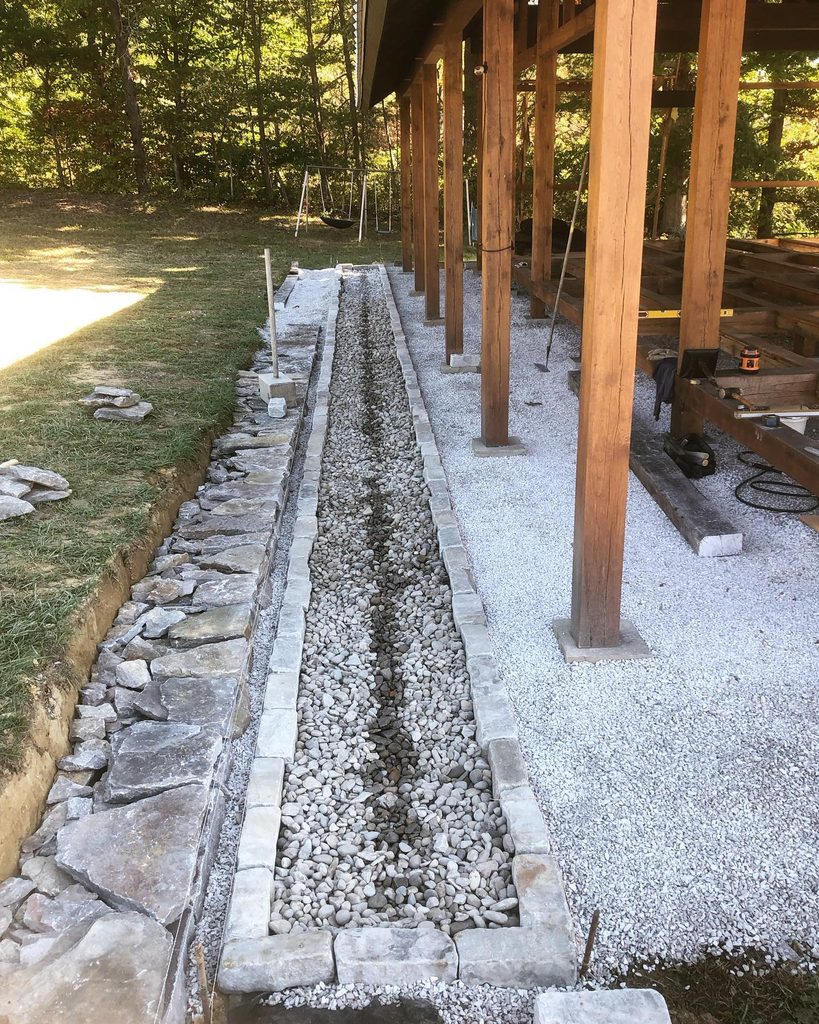
A gravel drainage trench can help protect soil from erosion and provide a neat-looking route for rainwater.
Create a shallow channel that slopes away from your house and fill it with suitable drainage stone.
Landscape edging can help keep the gravel contained and separate it from surrounding mulch or lawn.
For a more decorative appearance, use a mix of smooth stones and larger rocks.
A gravel-filled trench without an outlet or sufficient infiltration capacity may simply store water, so evaluate the soil and drainage conditions before installing one.
If your yard has persistent drainage problems, a properly designed pipe system may be more effective.
15. Downspout Extension Hidden in Landscaping
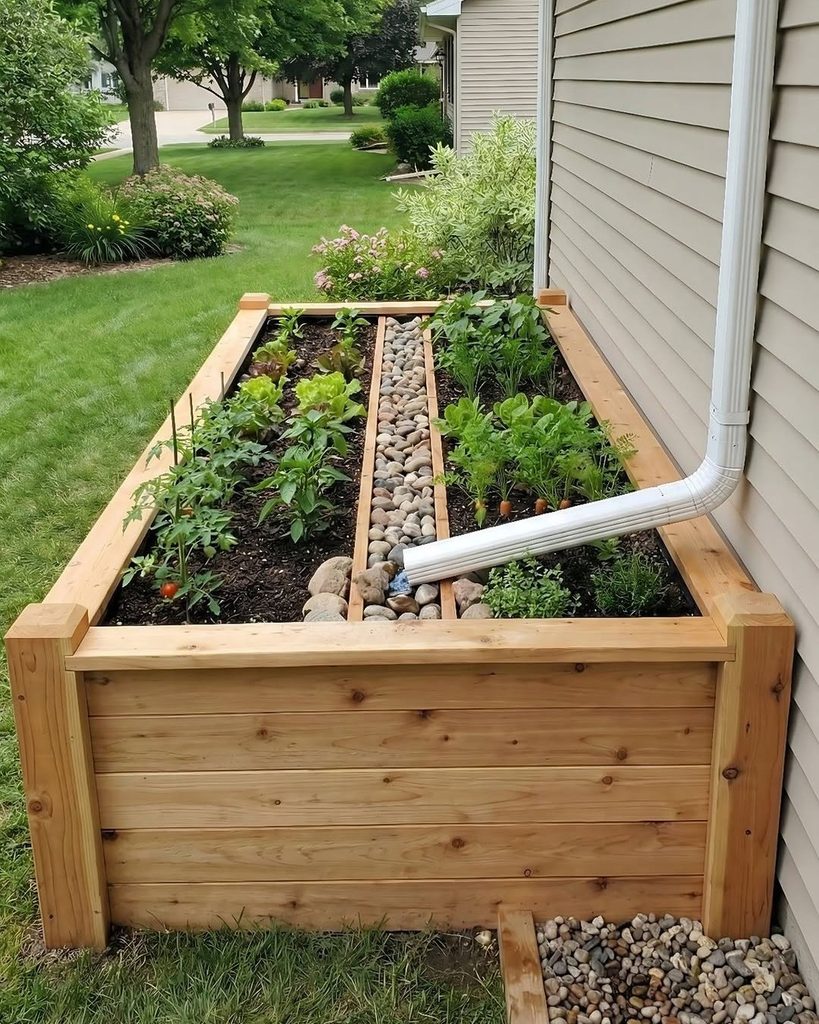
If you don’t like the appearance of exposed drainage pipes, consider incorporating a downspout extension into your landscaping.
A solid drainage pipe can be routed through a garden bed and concealed beneath suitable landscaping materials.
Decorative stones, low-growing plants, and carefully positioned edging can help the drainage system blend into its surroundings.
Keep cleanouts and other maintenance points accessible, and avoid planting large shrubs directly over buried pipes.
Make sure the pipe has an appropriate outlet rather than simply ending beneath the mulch.
This approach is particularly useful for front yards where you want effective drainage without distracting from your home’s exterior.
Conclusion
Managing rainwater doesn’t have to mean installing unattractive pipes across your yard. With the right downspout drainage ideas, you can protect your foundation, reduce erosion, and create a more attractive outdoor space.
Whether you choose a simple flexible extension, a decorative dry creek bed, or an underground drainage system, the important thing is directing water toward a suitable location where it won’t cause additional problems.
Start by observing where water collects during a heavy rainfall, then choose a solution that fits your yard’s conditions and your budget.
Which of these downspout drainage ideas would work best for your home? Choose your favorite, plan your drainage route, and start creating a yard that looks beautiful even after a rainy day.
For more inspiration, explore our other landscaping and outdoor DIY ideas to discover practical ways to improve your home’s exterior.
