
Pallet garden projects are a creative way to turn simple wooden pallets into practical planting spaces. These projects are popular because they are affordable, easy to customize, and work well in both small and large outdoor areas. With a little creativity, pallets can become vertical gardens, raised beds, or decorative plant displays.
Because pallets are flexible to work with, they can fit different garden styles and spaces. From compact balcony setups to backyard features, there are plenty of ways to adapt them to your needs. The ideas below showcase inspiring pallet garden designs that combine function, creativity, and natural beauty.
Painted Vertical Pallet Garden with Hanging Buckets
This painted pallet garden turns a simple wall into a layered planting space beside a house window.
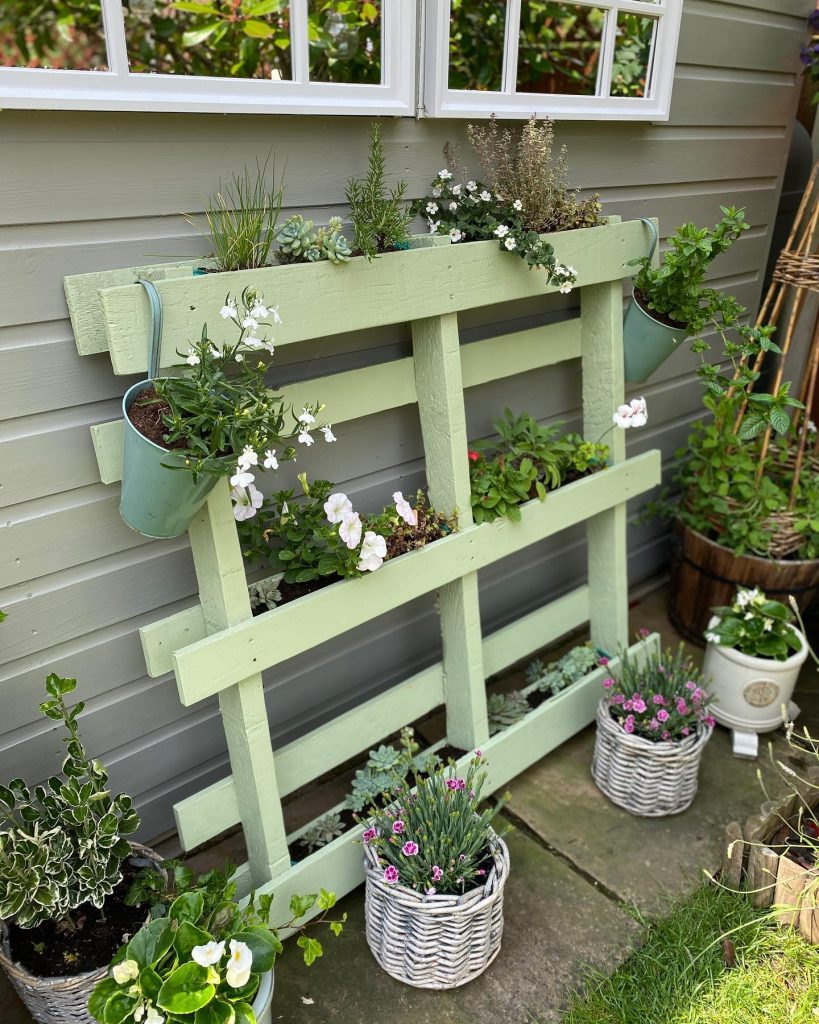
The pallet stands upright and holds narrow planter boxes filled with herbs, flowers, and trailing plants.
Soft green paint blends with the siding and helps the structure feel like part of garden surroundings.
Metal buckets hang on the sides, adding extra planting pockets for herbs or compact flowering plants.
Place potted plants around the base to create depth and turn the pallet into a focal garden.
Dark Wood Pallet Succulent Wall Garden
This pallet garden turns a dark stained pallet into a vertical display filled with colorful succulents.
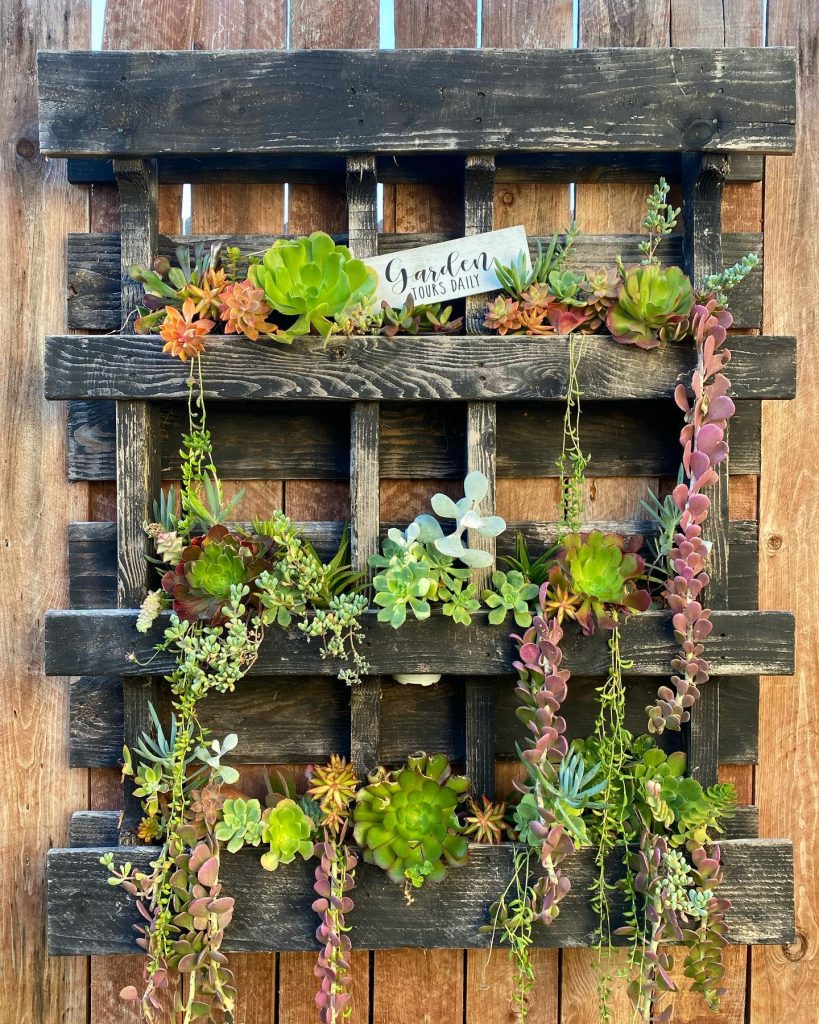
Soil fills the horizontal rows where different succulent varieties grow in compact clusters.
Round rosettes, trailing stems, and layered leaves create texture across the wooden frame. Some succulents spill downward and soften the straight pallet lines with natural movement.
Mounting the pallet against a wooden fence helps support the structure while turning the wall into a dense succulent garden feature.
Tiered Pallet Flower Planter
This pallet garden uses a wooden pallet turned into a tiered planter that holds several rows of colorful flowers.
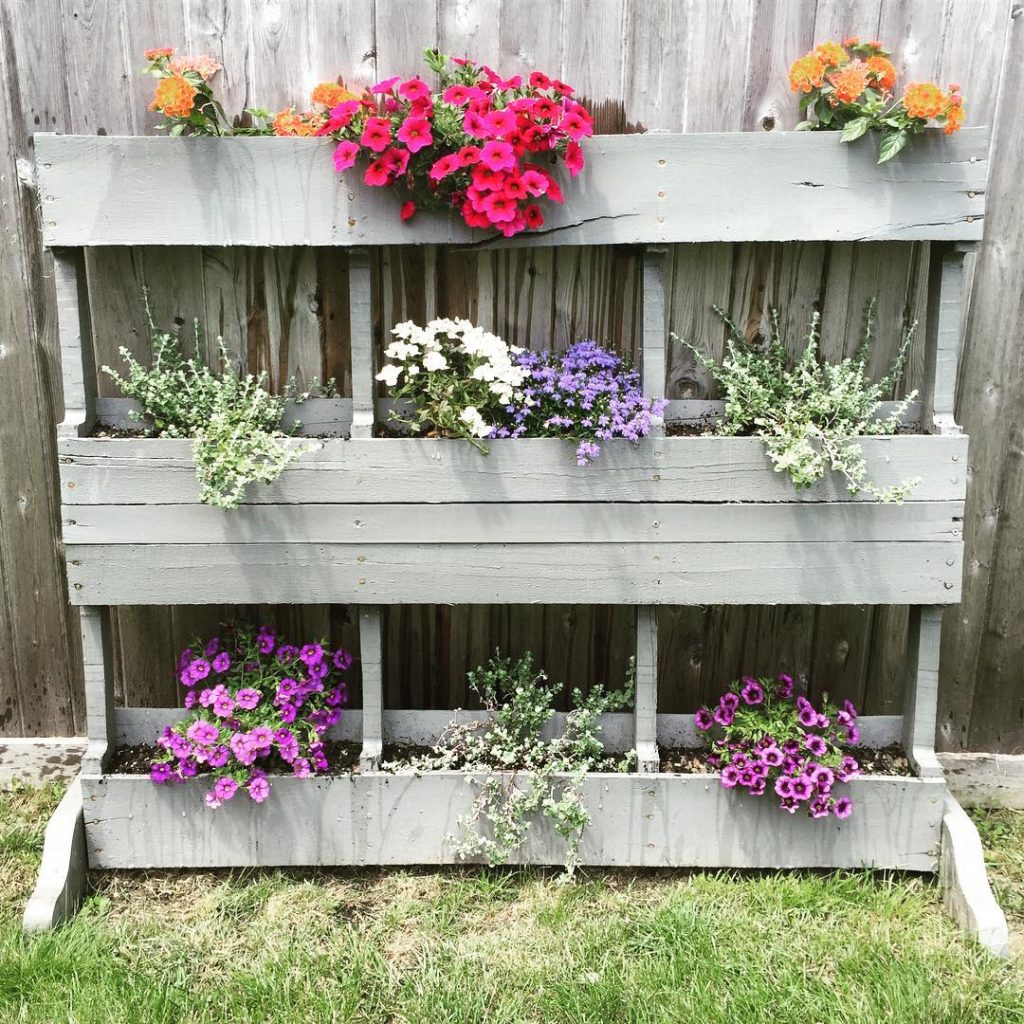
Deep planting spaces run across each level, allowing flowers to grow in full clusters along the frame.
Bright pink, purple, and white blooms spill slightly over the edges and soften the straight wooden lines. The pale painted wood contrasts with the flowers and keeps the display visually balanced.
Placing the pallet against a fence helps stabilize the structure while creating a layered garden feature.
Black Pallet Succulent Display with Hanging Pots
This pallet garden uses a painted black pallet as a backdrop for small terracotta pots filled with succulents.
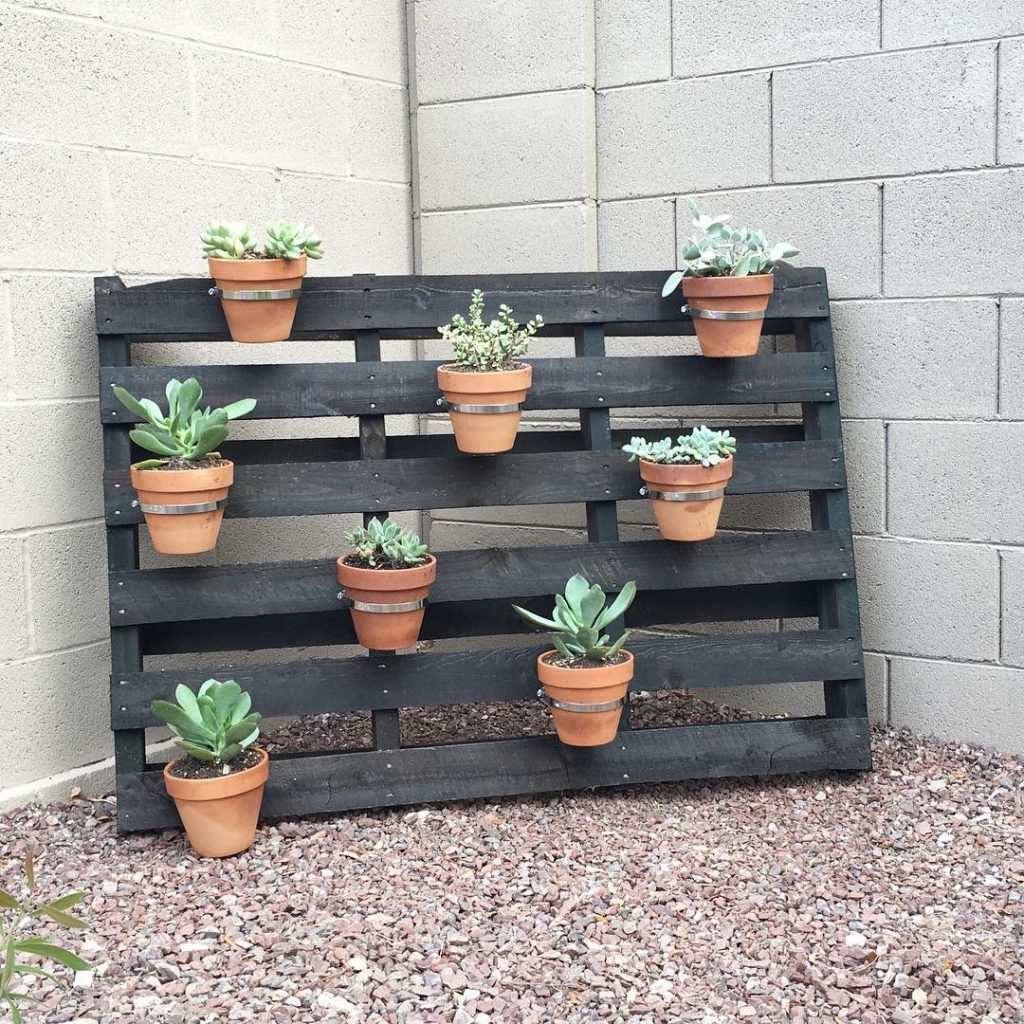
Metal bands attach the pots to the wooden slats and hold them securely across the pallet frame.
Each container holds a compact succulent that adds soft green tones against the dark wood. Spacing the pots evenly creates a balanced pattern across the display.
Leaning the pallet against a wall keeps the structure stable and turns a plain corner into a simple garden feature.
Pallet Herb Garden Bed
This pallet garden uses a wooden pallet placed flat on the ground to create a simple herb planting bed.
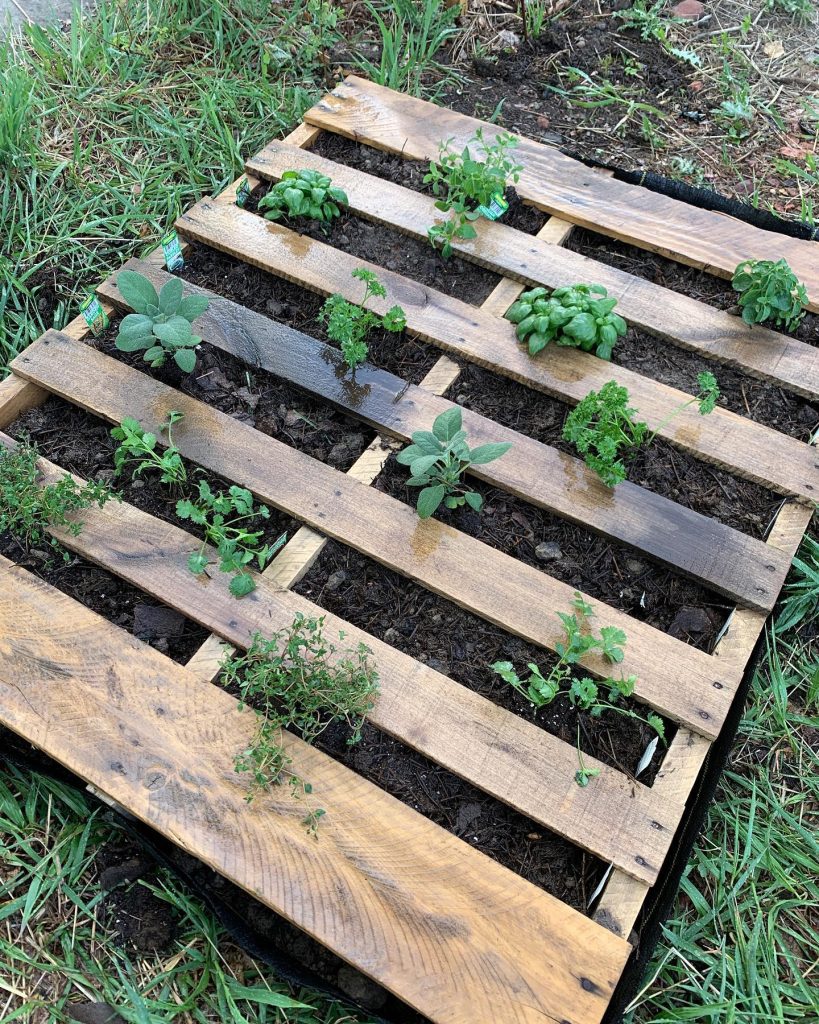
Soil fills the openings between the wooden slats, allowing herbs to grow in neat separated sections.
Basil, sage, thyme, and parsley sit in individual spaces that keep the plants organized as they grow. The pallet frame helps guide spacing and prevents plants from spreading too closely together.
This setup works well for backyard herb gardens where gardeners want a clear layout without building raised beds.
Pallet Flower Display with Rope Shelves
This pallet garden uses simple rope lines to hold rows of small flower pots across the frame.
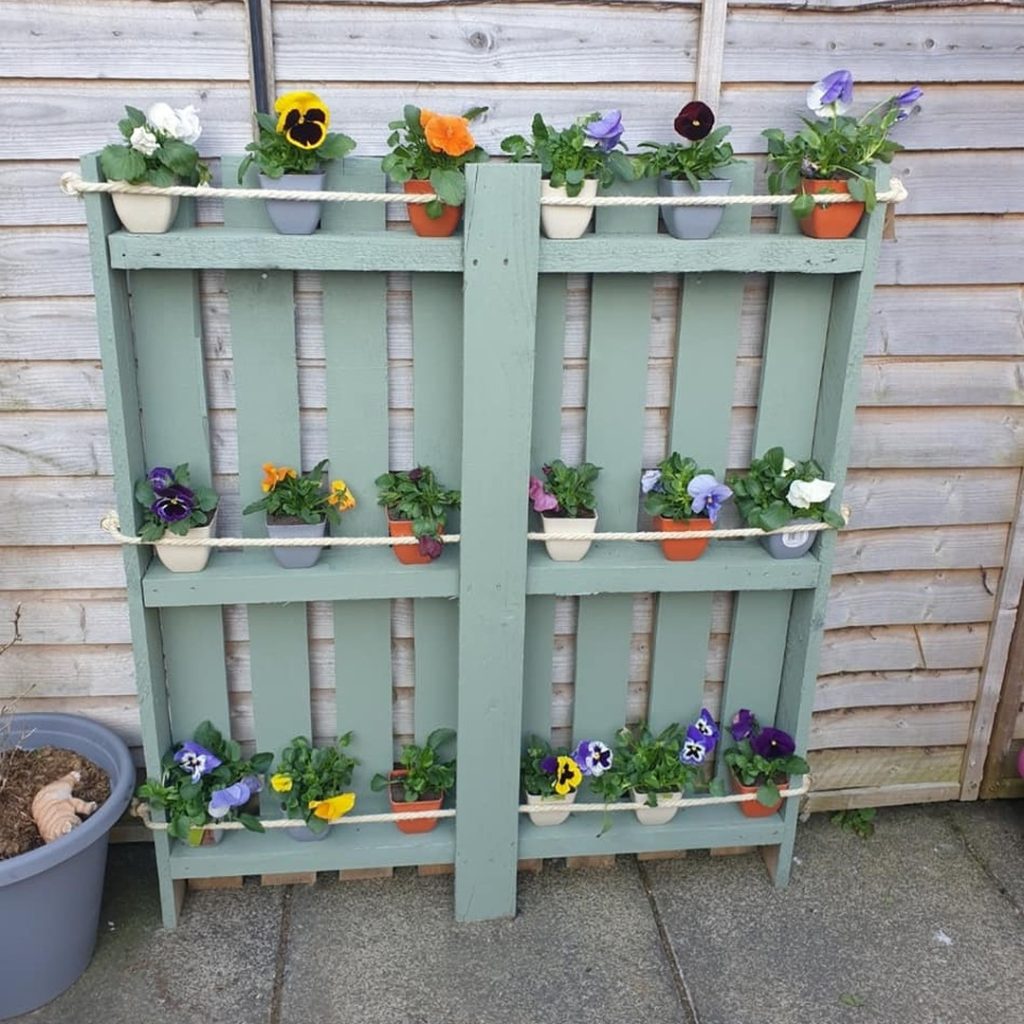
The painted pallet stands upright against a wooden fence and creates a neat vertical planting display.
Bright pansies fill the pots and add strong color that stands out against the soft green pallet.
Each row holds several containers, making it easy to swap plants during different growing seasons.
This setup works well for patios, small yards, or fences where ground planting space stays limited.
Rustic Vertical Pallet Garden Wall
This pallet garden turns a simple wooden pallet into a vertical planting wall filled with flowers and greenery, creating a layered garden feature against the fence.
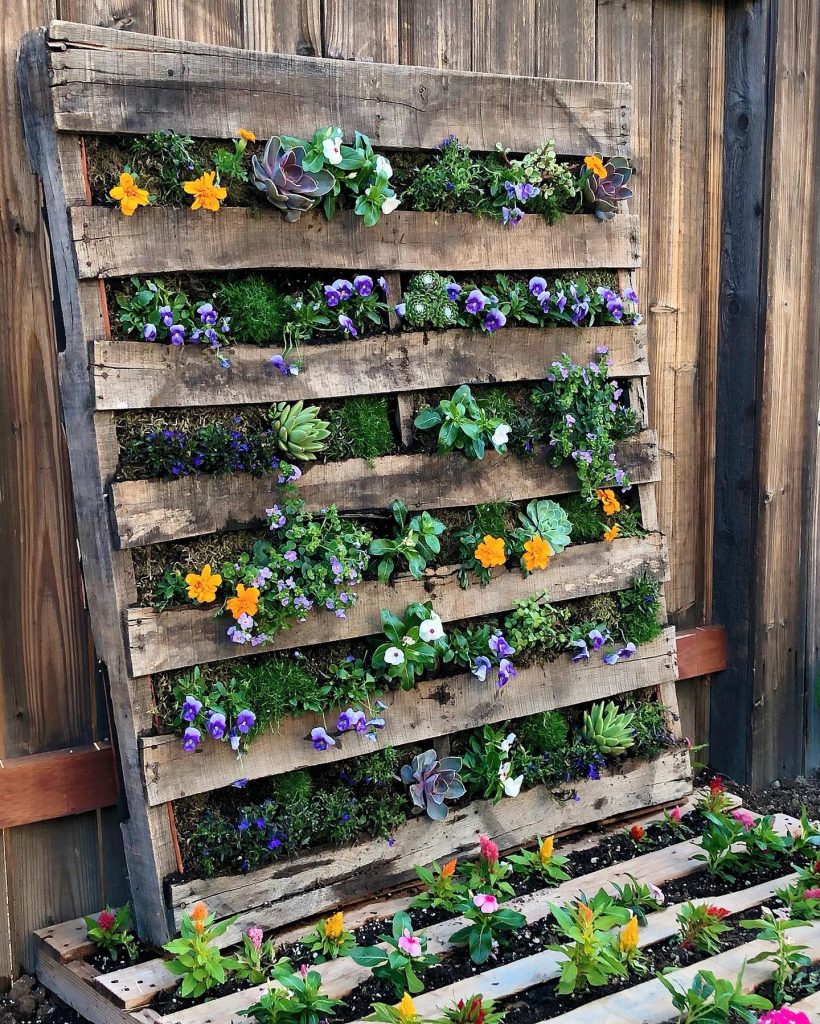
The pallet leans against a wooden fence and forms rows where soil and plants grow neatly between the slats.
Bright flowers, succulents, and compact foliage fill the openings and build a dense living display.
Different plant heights and colors break up the rough wood texture, adding strong visual contrast throughout the pallet garden.
Ground Pallet Garden Beds for Small Plantings
This pallet garden uses several wooden pallets laid flat on the ground to create simple planting beds across the lawn.
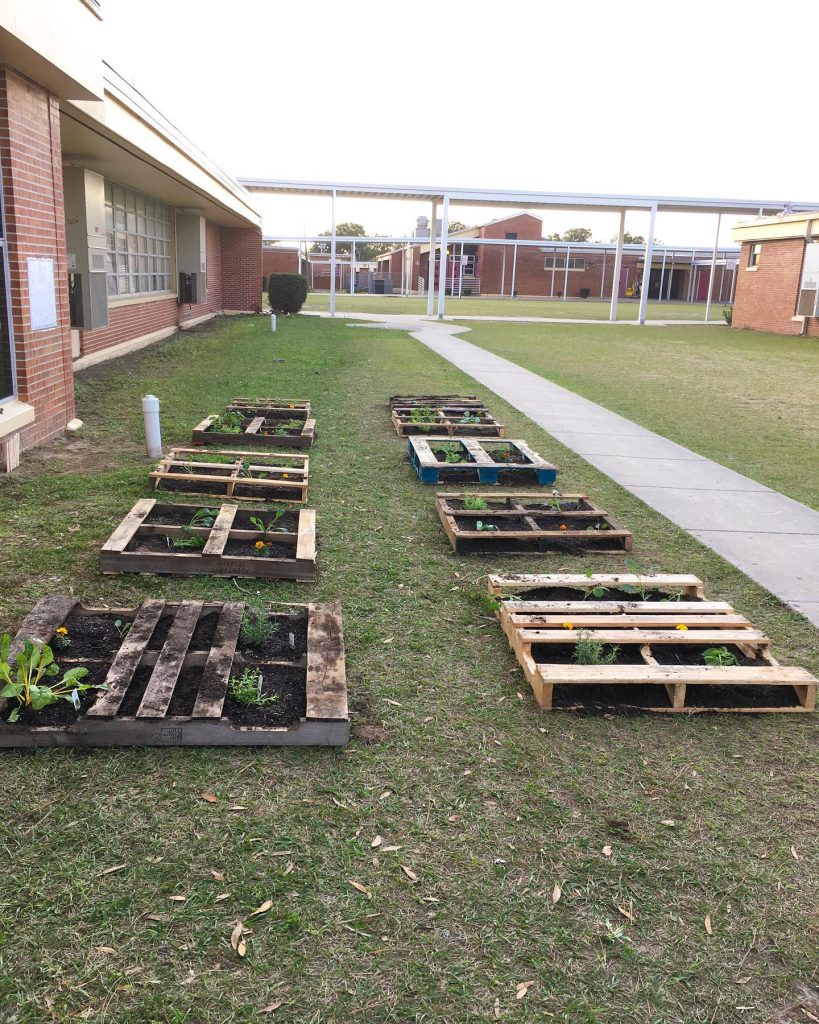
Soil fills the pallet openings, allowing herbs, vegetables, or flowers to grow in clearly separated sections.
The wooden slats help organize the plants and keep spacing consistent without complex garden planning. Arranging multiple pallets in rows builds a structured garden layout that stays easy to expand later.
This approach works well for school gardens, community spaces, or yards where raised beds are not available.
Vertical Pallet Succulent Garden
This pallet garden creates a vertical succulent display using simple wooden boards arranged into shallow planting shelves.
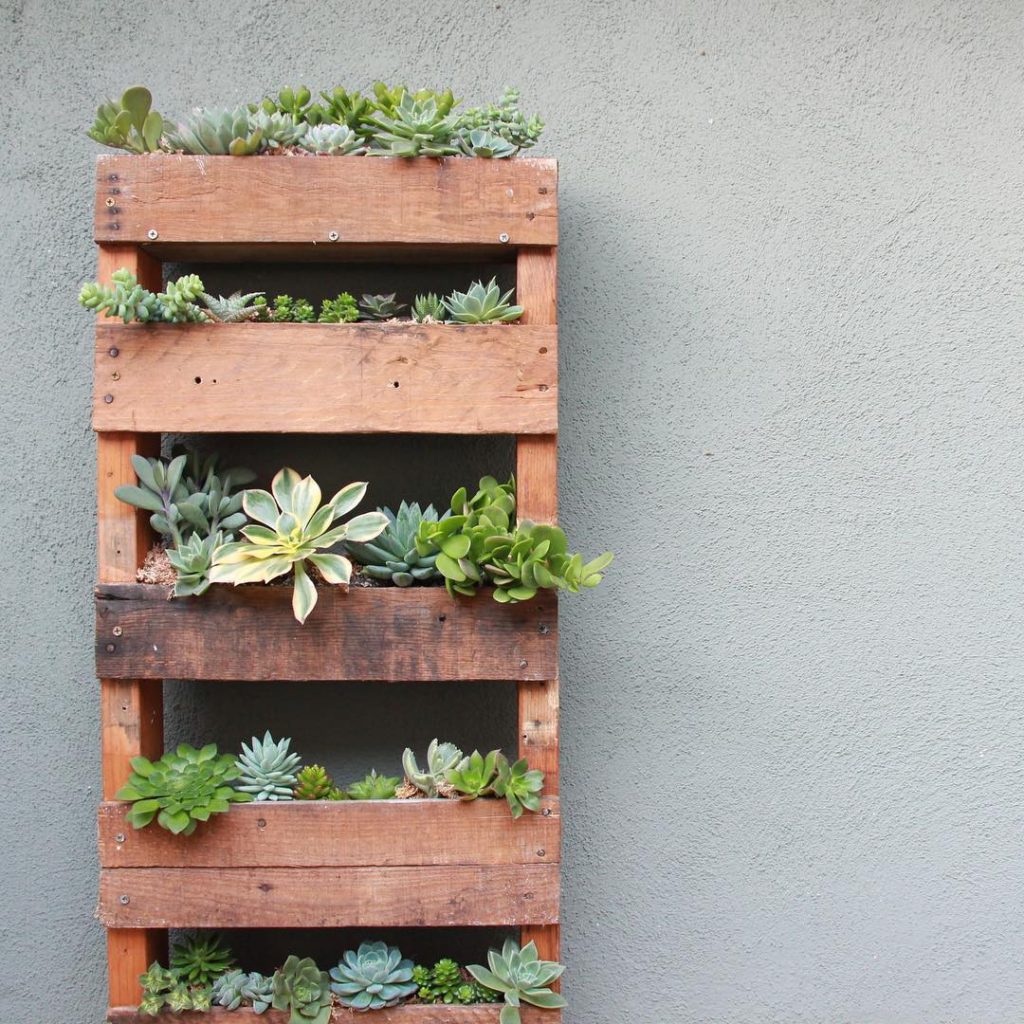
Each horizontal row holds soil where compact succulents grow in tidy clusters along the frame.
The layered structure keeps plants visible while allowing different shapes and colors to stand out. Succulents work well in this setup because they need little soil and minimal watering.
Leaning the pallet against a wall keeps the planter stable and turns a blank surface into a structured garden feature.
Double Pallet Flower Garden Wall
This pallet garden uses two wooden pallets placed side by side to create a wider vertical planting display.
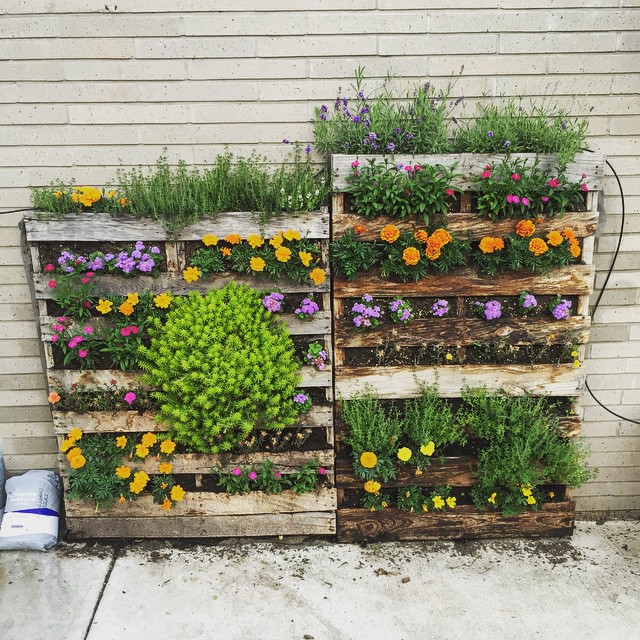
Soil fills the pallet openings and supports rows of flowers, herbs, and leafy plants.
Bright marigolds, purple blooms, and green foliage spread across the boards and create strong color contrast. One section includes a fuller plant that breaks the straight lines and adds visual balance.
Placing the pallets against a wall helps stabilize the structure while turning the surface into a compact vertical garden.
Fence Mounted Pallet Flower Planter
This pallet garden attaches directly to a wooden fence and turns the wall into a compact planting space.
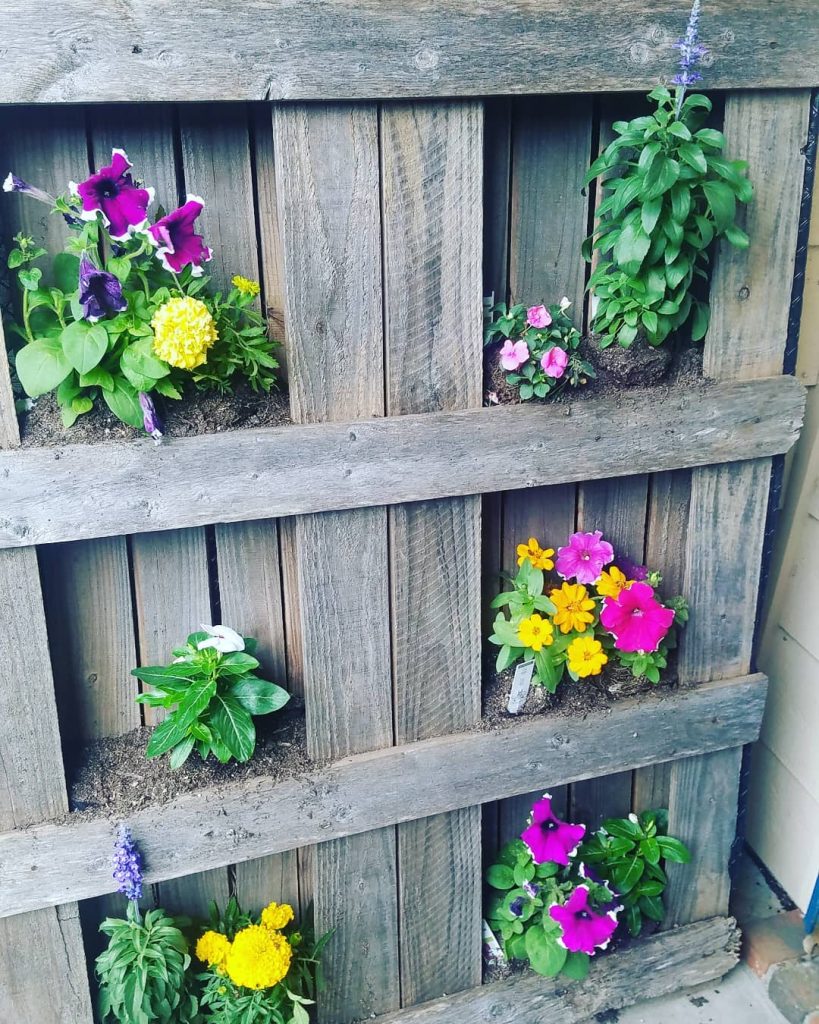
Soil fills the rectangular openings between the boards, creating small pockets where flowers and herbs can grow.
Bright petunias, marigolds, and leafy plants add strong color against the weathered wood background.
The staggered pockets spread the plants across the pallet and keep the display balanced. Mounting the pallet on the fence keeps the planter stable while using vertical space efficiently.
Large Pallet Wall Garden Installation
This pallet garden turns several wooden pallets into a wide wall installation filled with climbing and trailing plants.
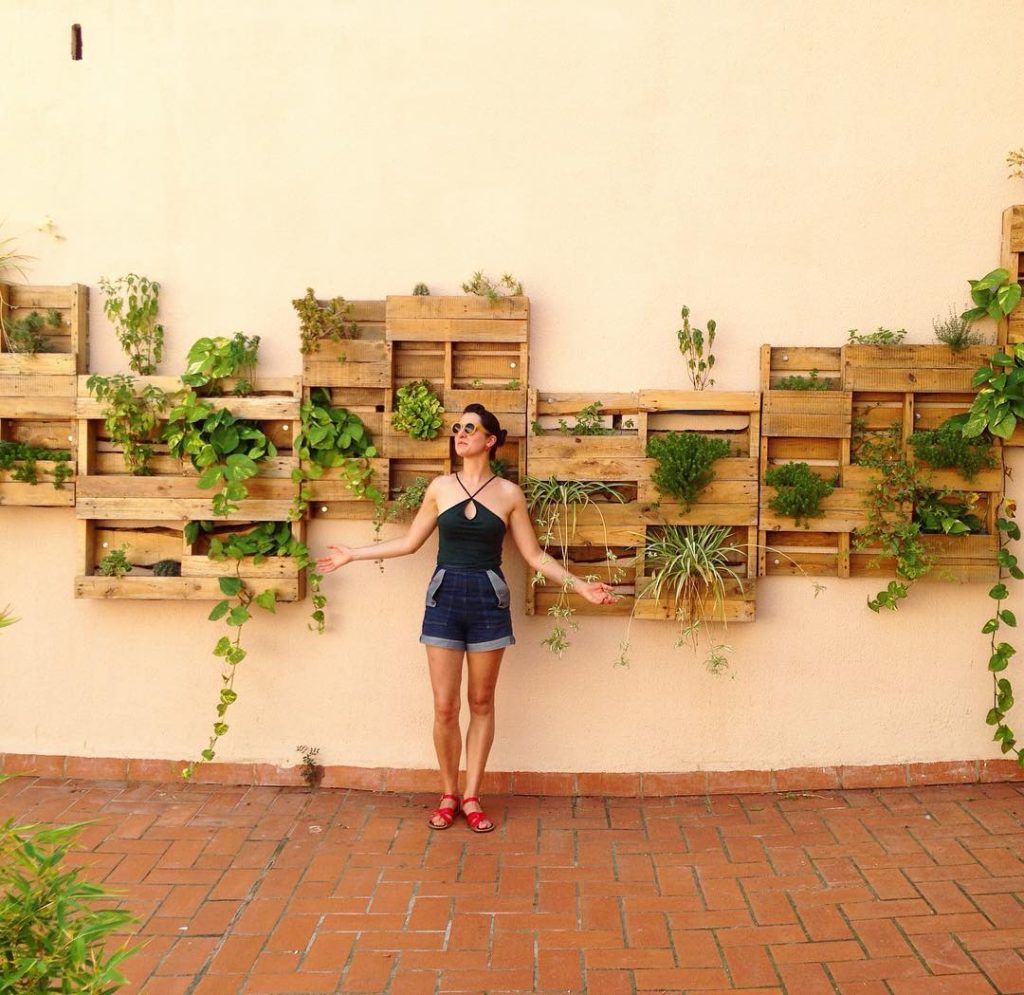
The pallets mount horizontally across the wall, creating multiple planting pockets that hold greenery at different heights.
Some plants spill downward while others grow upright, giving the display natural movement and depth. Spacing the pallets apart breaks the layout into sections and keeps the wall from feeling crowded.
This approach works well for patios or courtyards where a large blank wall needs greenery.
Corner Pallet Flower Planter
This pallet garden fits neatly into a corner beside the house and turns a narrow space into a vertical flower display.
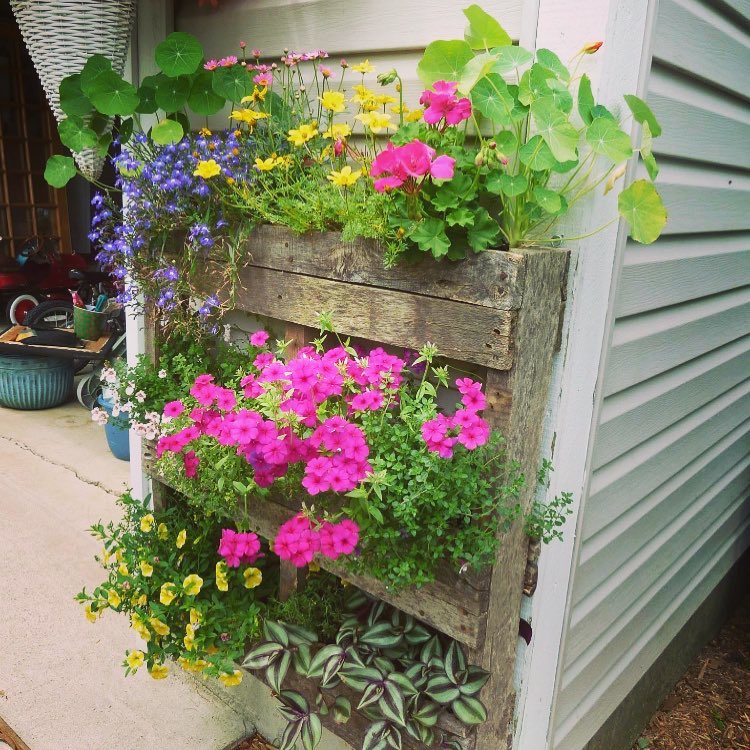
Wooden pallet boards create deep planting rows where colorful flowers grow in thick layers.
Bright pink blooms, yellow flowers, and trailing plants spill over the edges and soften the rough wood texture. The vertical layout keeps the plants compact while still creating a full garden look.
Placing the pallet against the wall helps support the planter and highlights the flowers.
Layered Pallet Planter with Built In Soil Rows
This pallet garden transforms a wooden pallet into a layered planter that holds soil and plants between each horizontal slat.
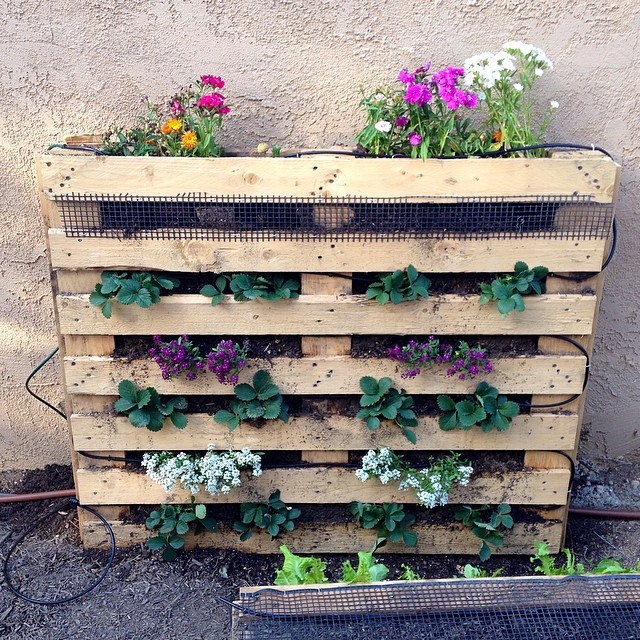
Flowers grow along the top while smaller plants spread through the openings in the lower rows.
Wire mesh and lining help keep soil in place so plants stay secure inside the pallet structure. The design creates several planting levels without needing separate pots or containers.
Placing the pallet against a wall keeps the structure stable and turns the vertical planter into a compact garden feature.
Colorful Pallet Flower Wall with Hanging Pots
This pallet garden turns a bright green pallet into a dense vertical flower display filled with small hanging pots.
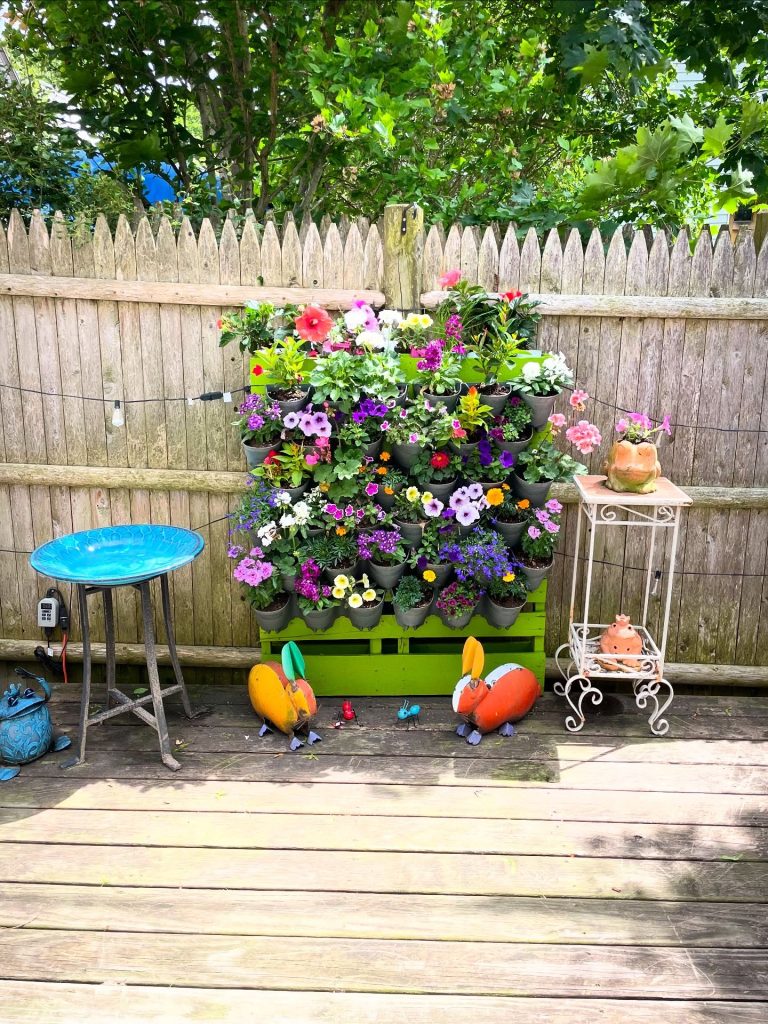
Rows of containers attach across the pallet and hold colorful flowers that create a layered wall of blooms.
The vertical setup keeps plants organized while saving floor space on the wooden deck. Placing the pallet against the fence creates a strong backdrop that highlights the flowers and greenery.
Small garden decorations and nearby furniture help frame the display and make the corner feel lively.
Pallet Vegetable Garden Bed
This pallet garden turns a wooden pallet into a structured vegetable bed where plants grow between the slats.
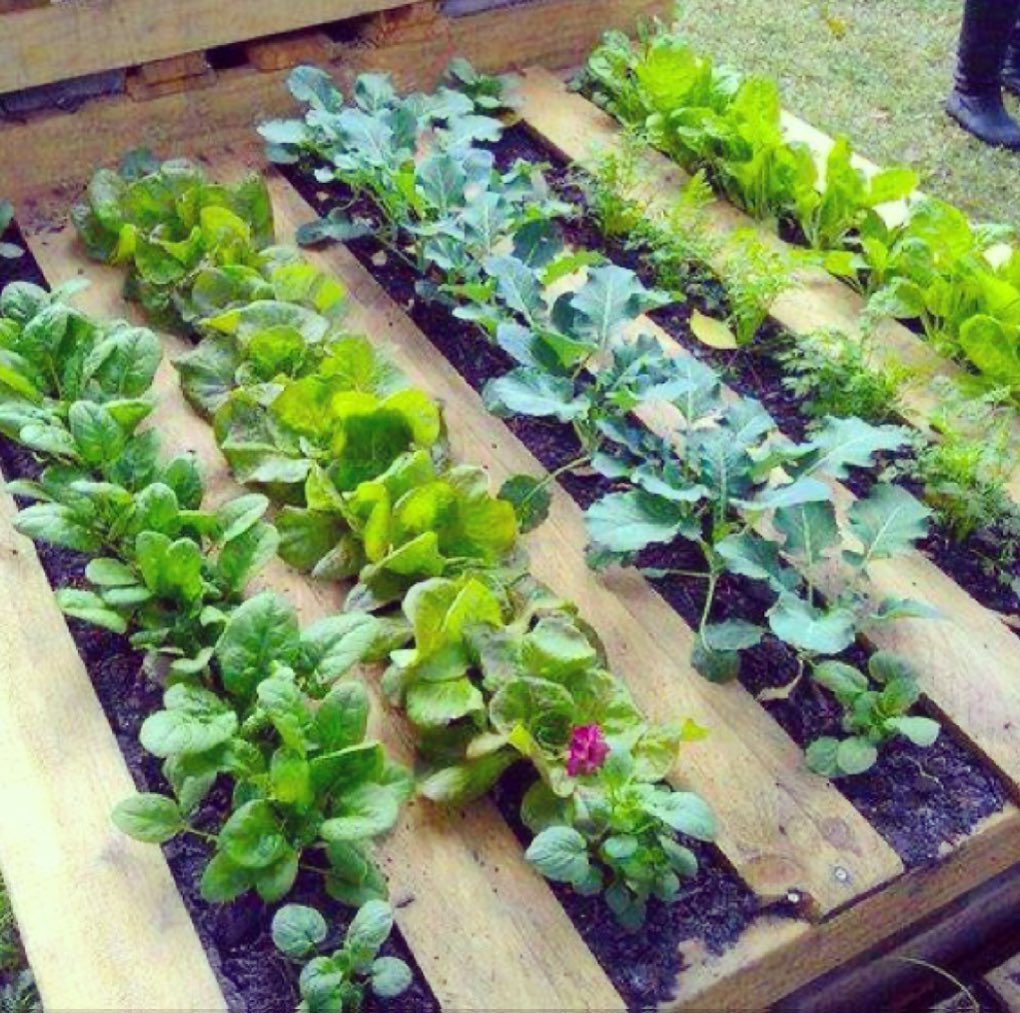
Soil fills the long openings and creates narrow rows that guide where each vegetable grows.
Leafy greens, cabbage, and herbs spread through the sections and stay organized as they mature. The wooden boards naturally space the plants and help prevent overcrowding in the bed.
Placing the pallet directly on the ground creates a simple garden layout that works well for backyard vegetable growing.
Painted Pallet Tiered Flower Planter
This pallet garden uses a painted wooden pallet to create three long planting rows for flowers.
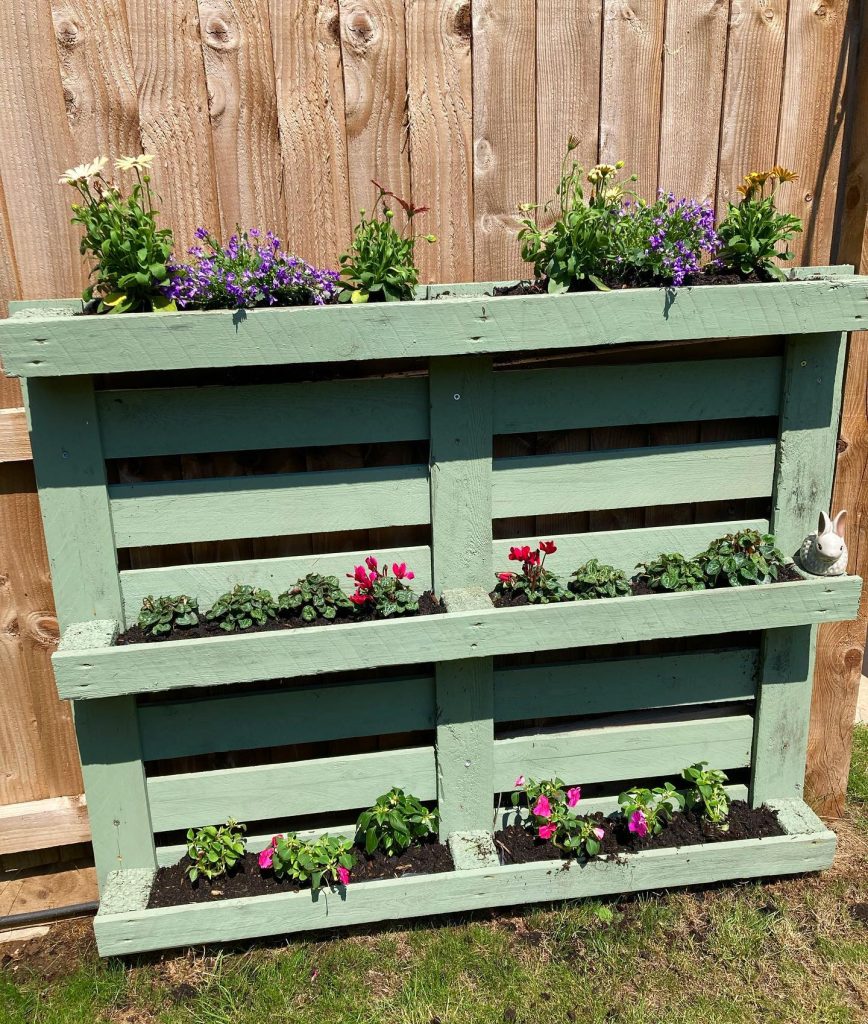
Soil fills the horizontal sections and supports small flowering plants across each tier. Bright pink blooms and leafy plants grow along the lower rows while taller flowers fill the top planter.
The soft green paint contrasts with the natural wood fence and highlights the layered structure.
Placing the pallet directly against the fence keeps the planter stable and turns the wall into a compact garden display.
Dark Painted Pallet Flower Planter
This pallet garden uses a dark painted pallet to create three planting rows filled with bright flowering plants.
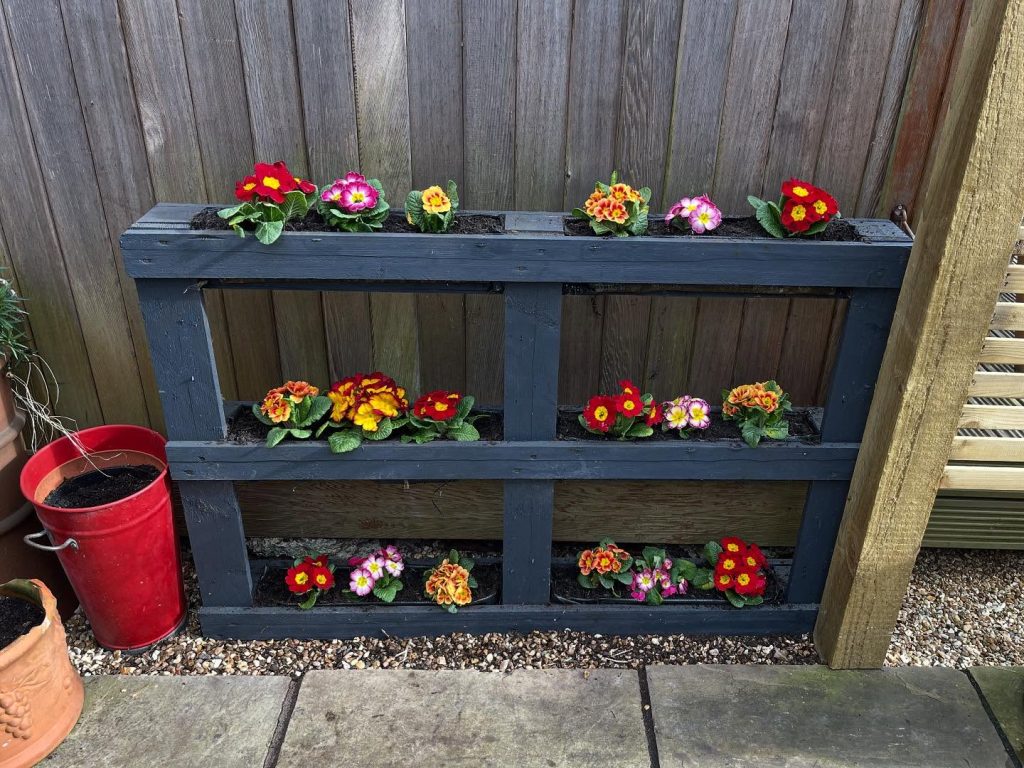
Soil fills the horizontal sections, allowing colorful primroses to grow in evenly spaced pockets.
Red, yellow, and pink blooms stand out strongly against the dark wood background. The layered rows keep the flowers organized while still creating a full garden display.
Placing the pallet against the fence helps support the structure and turns a narrow space into a compact flower garden.
Labeled Pallet Vegetable Garden
This pallet garden uses a painted wooden pallet to grow vegetables in clearly labeled planting rows.
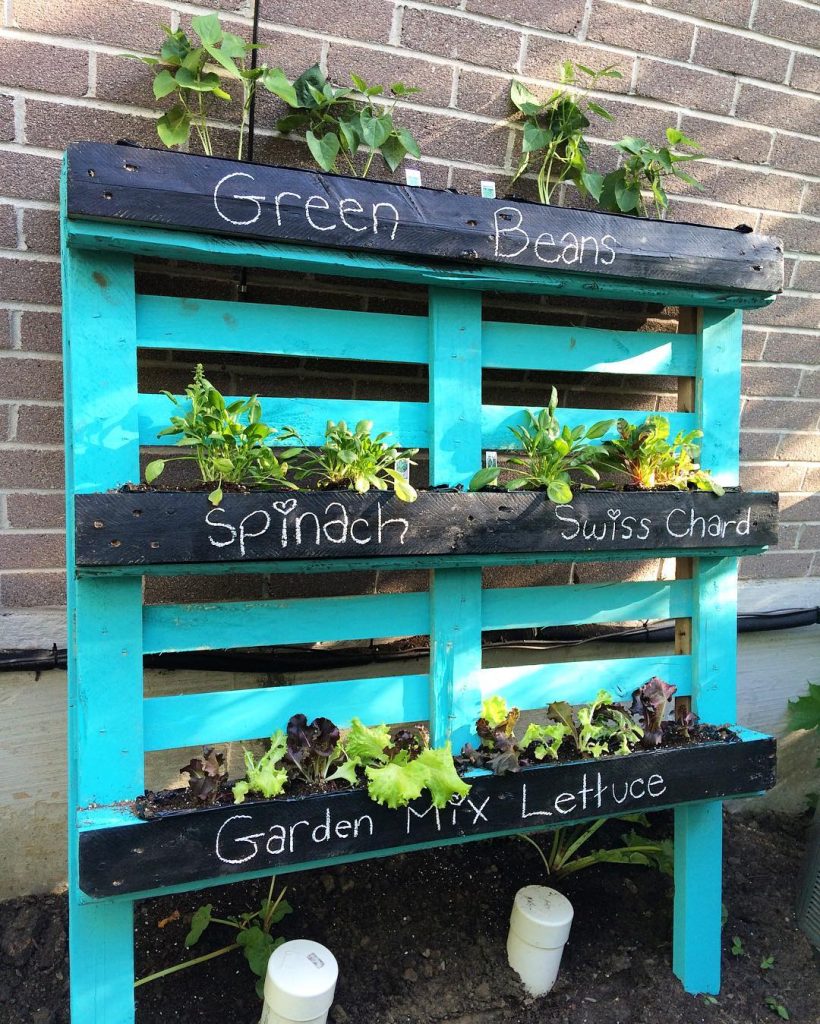
Soil fills the horizontal sections where spinach, Swiss chard, and mixed lettuce grow across the tiers.
The top planter holds climbing green beans that rise above the pallet and add height to the display. Chalkboard style boards label each section and make the garden easy to organize.
Placing the pallet against a brick wall keeps the planter stable while turning the space into a compact vegetable garden.
Corner Pallet Garden Panels
This pallet garden uses two wooden pallet panels arranged in a corner shape to create a compact vertical planting space.
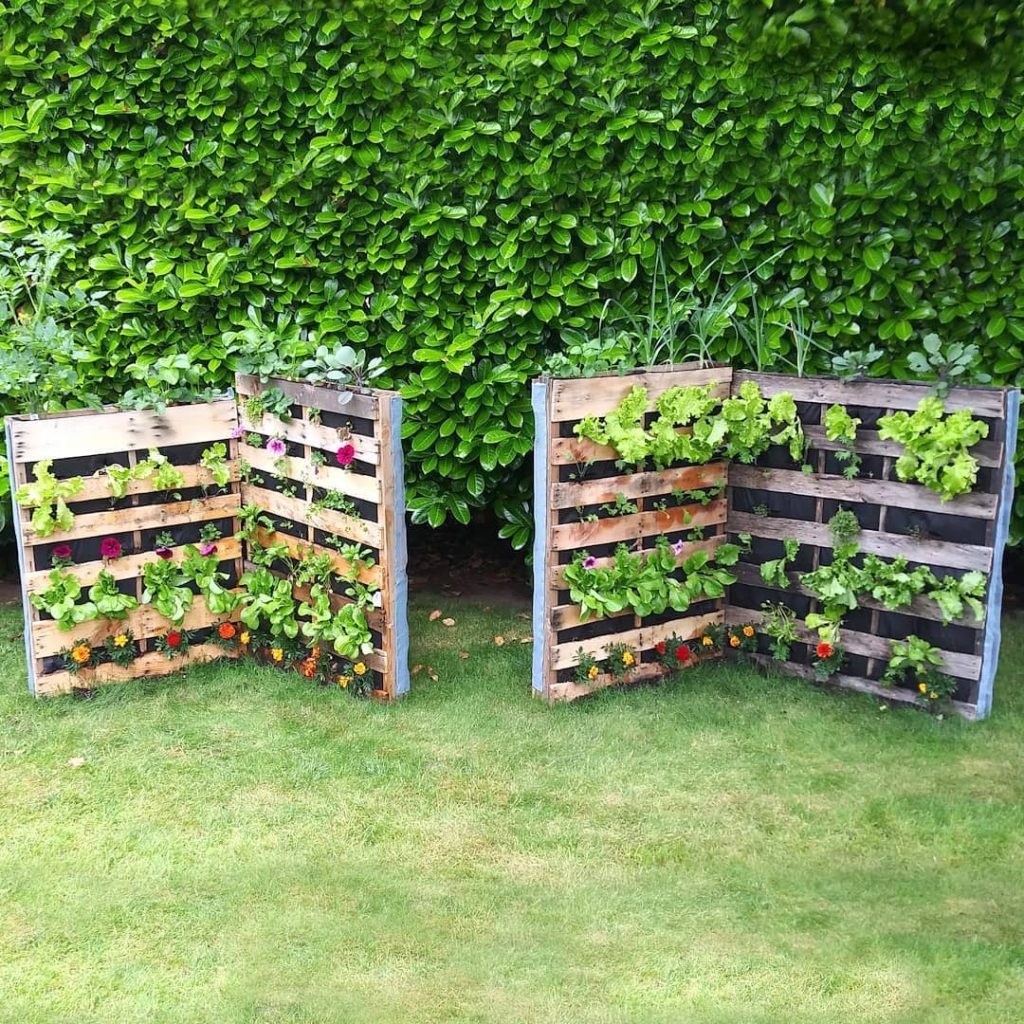
Soil fills the horizontal openings where lettuce, herbs, and flowers grow in layered rows.
The corner layout helps support the pallets while creating a small garden feature that stands on the lawn.
Leafy greens spread across the upper sections while flowers add color near the base. This setup works well for backyard gardens where vertical planting saves ground space.
Dense Vertical Pallet Flower Garden
This pallet garden creates a dense vertical planting wall where flowers and greenery grow tightly across the frame.
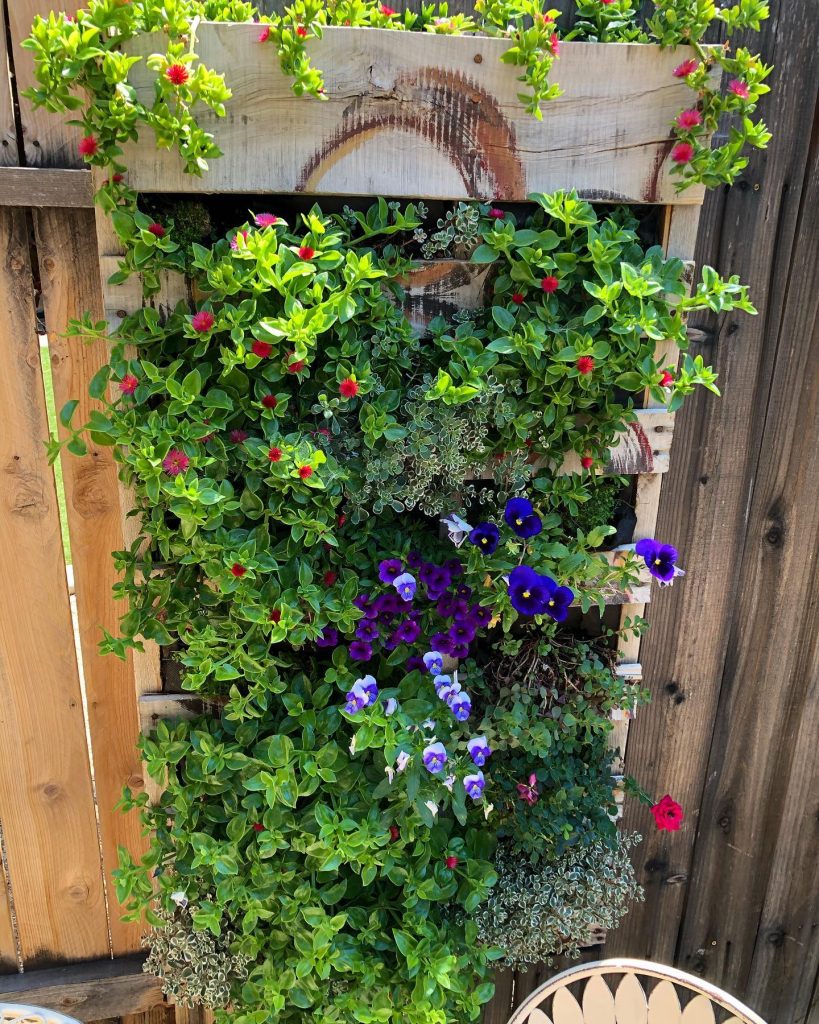
Soil fills the pallet openings and supports layers of leafy plants, trailing vines, and colorful blooms.
Purple pansies and small red flowers add contrast against the rich green foliage. Some plants spill over the edges and soften the wooden structure with natural movement.
Mounting the pallet against a fence turns the narrow wall into a lush vertical garden feature.
How to Choose Safe Pallets for Gardening
Making a pallet garden is a great way to upcycle wood and use vertical space in small gardens. Pallets can become planters, trellises, or raised beds for flowers, herbs, and vegetables.
However, not all pallets are safe to use. Some are treated with chemicals or used to transport hazardous materials.
Before starting a pallet project, take time to check the pallet’s markings and condition to make sure it will not contaminate your soil.
Check the Pallet Stamp
Most pallets have a stamp that explains how the wood was treated. These markings help you identify safe pallets. Safe markings include:
- DB – Debarked wood
- KD – Kiln dried
- HT – Heat treated
Heat treated pallets are usually the safest option because the wood is sterilized with heat instead of chemicals.
Avoid Chemically Treated Pallets
Never use pallets stamped with:
- MB – Methyl bromide fumigation
- SF – Sulphuryl fluoride fumigation
These pallets were treated with toxic pesticides that can remain inside the wood and contaminate garden soil.
Avoid Painted or Dirty Pallets
Skip pallets that are painted, heavily stained, or smell like chemicals.
The paint may contain harmful substances, and stains could indicate exposure to oils, pesticides, or industrial materials.
Also avoid pallets that appear oily, moldy, or damaged.
Choose Pallets From Clean Sources
Look for pallets used to transport safe materials such as food products or packaged goods.
Good places to find pallets include bakeries, grocery stores, garden centers, and hardware stores. Businesses often stack pallets outside for people to take.
Avoid pallets found near gas stations, chemical warehouses, or industrial sites where contamination may occur.
Check the Pallet Structure
Choose pallets with narrow gaps between the boards. This helps hold soil better when used as a planter. If gaps are wide, you can line the pallet with landscaping fabric to keep compost from falling through.
When in Doubt, Skip It
Most pallets are safe to use, especially those stamped HT or KD and made from clean, untreated wood. However, if you cannot identify the treatment or the pallet looks questionable, it is better to leave it behind.
A safe pallet ensures your plants grow in clean soil and keeps your pallet garden healthy.
Best Plants for a Pallet Garden
Pallet gardens save space and work well in small yards, patios, and balconies. However, the planting pockets are shallow, so plant choice matters. Shallow rooted plants grow best because they do not require deep soil to thrive. Herbs are a great option for pallet gardens. Thyme, parsley, oregano, cilantro, chives, dill, mint, and tarragon grow well in compact spaces and are easy to harvest.
Leafy greens also perform well in pallet gardens. Lettuce, spinach, kale, and arugula grow quickly and do not need deep roots. These crops are perfect for small vertical spaces and can be harvested regularly. Strawberries are another popular choice because they spill nicely from the pallet openings and add both color and fruit.
Succulents work especially well if you want a low maintenance pallet garden. They require little water and grow comfortably in shallow soil. For decorative gardens, annual flowers bring color and life to the structure. Good choices include alyssum, nasturtiums, wave petunias, dwarf marigolds, lobelia, verbena, ivy, begonias, and impatiens for shaded areas.
In general, anything that grows well in a shallow container will work in a pallet garden. This includes herbs, greens, strawberries, peppers, beans, and small bedding flowers. Mix edible plants with decorative ones to create a pallet garden that looks beautiful and stays productive all season.
Wrapping Up
Pallet gardens show how simple materials can become useful and beautiful garden features. With a few basic tools and a little planning, wooden pallets can transform empty walls, fences, or small yards into productive planting spaces.
Whether you grow herbs, flowers, vegetables, or succulents, pallet gardens make it easy to organize plants while saving space. They also allow gardeners to experiment with creative layouts, colors, and vertical designs.
By choosing safe pallets and selecting plants that thrive in shallow soil, you can build a pallet garden that stays healthy and productive.
With so many possible designs, pallet gardening offers a practical way to add greenery, color, and structure to almost any outdoor space.

Samuel N is the founder of Improve Floor and has been in the flooring industry since 2005. Since then, his mission has been to make flooring easier for everyone. He helps countless people with flooring installation, finishing, maintenance, and repairs each year.